
Interview & Placement Preparation
Interview & Placement Preparation
Introduction
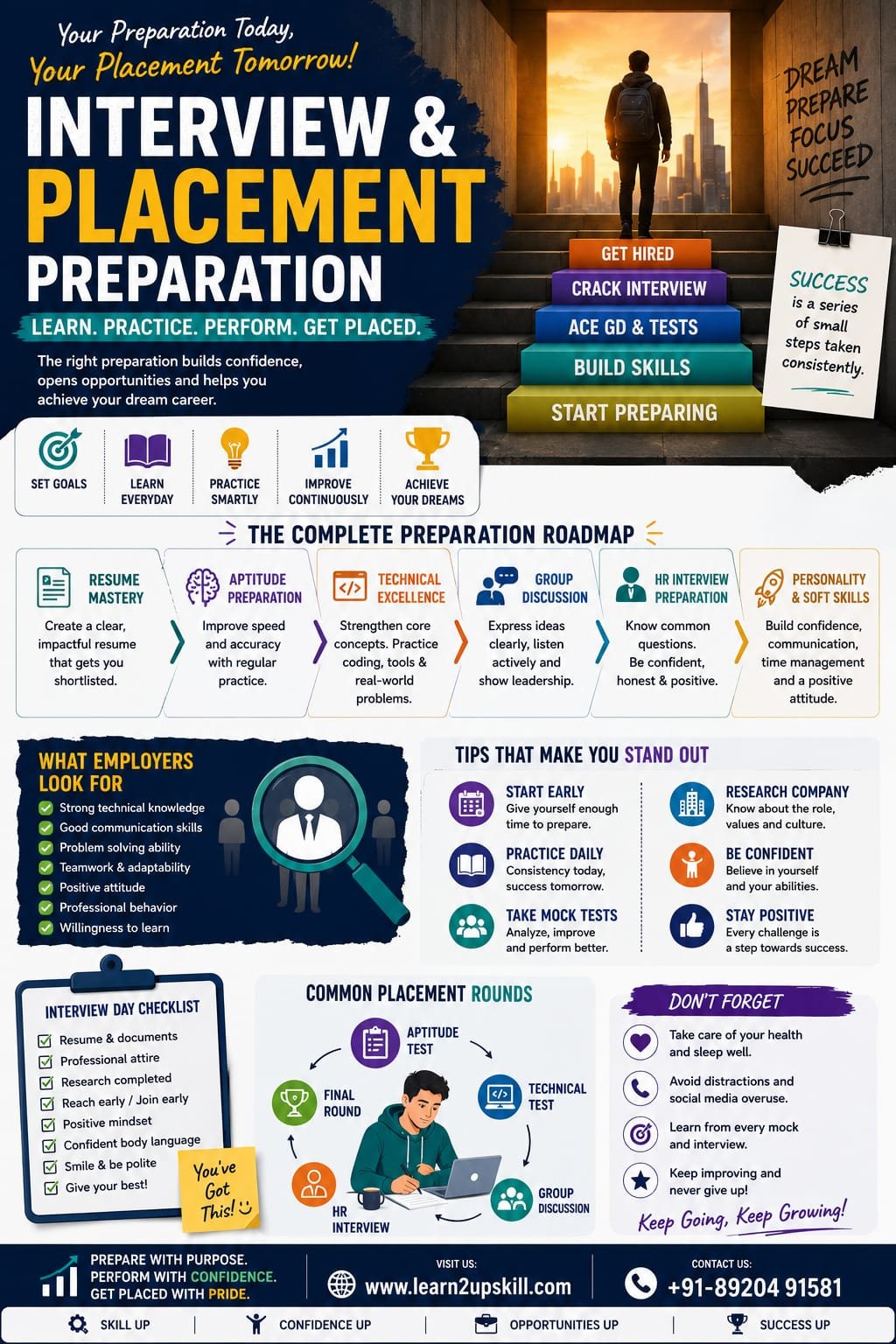
Getting placed in a good company is one of the biggest milestones in a student’s career. Whether you are preparing for campus placements, internships, or your first job interview, success depends on much more than academic performance. Companies today look for candidates who possess technical knowledge, communication skills, confidence, problem-solving ability, and a positive attitude.
Interview and placement preparation is a continuous process that begins well before the interview date. With proper planning, consistent practice, and the right guidance, every student can improve their chances of securing a rewarding career.
At Learn2Upskill, we help students become industry-ready through career counselling, personality development, communication skills, resume building, interview preparation, and professional grooming.
—
What Is Placement Preparation?
Placement preparation is the process of developing the knowledge, skills, and confidence needed to successfully clear recruitment rounds and secure a job.
It includes:
– Resume building
– Aptitude preparation
– Technical knowledge
– Communication skills
– Group discussion practice
– HR interview preparation
– Mock interviews
– Personality development
– Professional etiquette
– Time management
A balanced preparation strategy ensures you are ready for every stage of the hiring process.
—
Why Is Placement Preparation Important?
Proper preparation helps you:
– Increase confidence.
– Perform better in interviews.
– Improve communication skills.
– Build a professional resume.
– Stand out among other candidates.
– Reduce interview anxiety.
– Increase your chances of getting selected.
– Build a successful career.
Preparation turns opportunities into success.
—
Stages of the Recruitment Process
Most companies follow these recruitment stages:
- Resume Screening
Recruiters review your resume to shortlist candidates.
- Aptitude Test
Tests may include:
– Quantitative aptitude
– Logical reasoning
– Verbal ability
– Data interpretation
- Technical Assessment
Depending on the role, candidates may face coding tests, technical questions, or practical assignments.
- Group Discussion
Companies assess:
– Communication
– Leadership
– Teamwork
– Listening skills
– Confidence
- HR Interview
The final stage focuses on personality, attitude, career goals, and cultural fit.
Understanding the process helps you prepare effectively.
—
Step 1: Build a Professional Resume
Your resume creates the first impression.
Include:
– Contact information
– Career objective
– Educational qualifications
– Technical skills
– Soft skills
– Projects
– Internships
– Certifications
– Achievements
– Languages known
Keep your resume clear, concise, and error-free.
—
Step 2: Improve Communication Skills
Strong communication helps throughout the recruitment process.
Practice:
– Speaking confidently.
– Active listening.
– Professional vocabulary.
– Public speaking.
– Group discussions.
– Presentation skills.
Good communication builds confidence and trust.
—
Step 3: Develop Technical Skills
Technical knowledge depends on your career field.
Examples include:
– Programming
– Microsoft Excel
– Data Analytics
– Artificial Intelligence (AI)
– Digital Marketing
– Cybersecurity
– Cloud Computing
– Graphic Design
– Financial Analysis
Keep learning through online courses, projects, and certifications.
—
Step 4: Prepare for Aptitude Tests
Practice regularly:
– Percentage
– Profit and Loss
– Time and Work
– Probability
– Number Series
– Logical Reasoning
– Coding-Decoding
– Reading Comprehension
Daily practice improves speed and accuracy.
—
Step 5: Master Group Discussions
During group discussions:
– Speak confidently.
– Respect others’ opinions.
– Support your ideas with examples.
– Avoid interrupting.
– Listen actively.
– Maintain positive body language.
Leadership is demonstrated through collaboration, not domination.
—
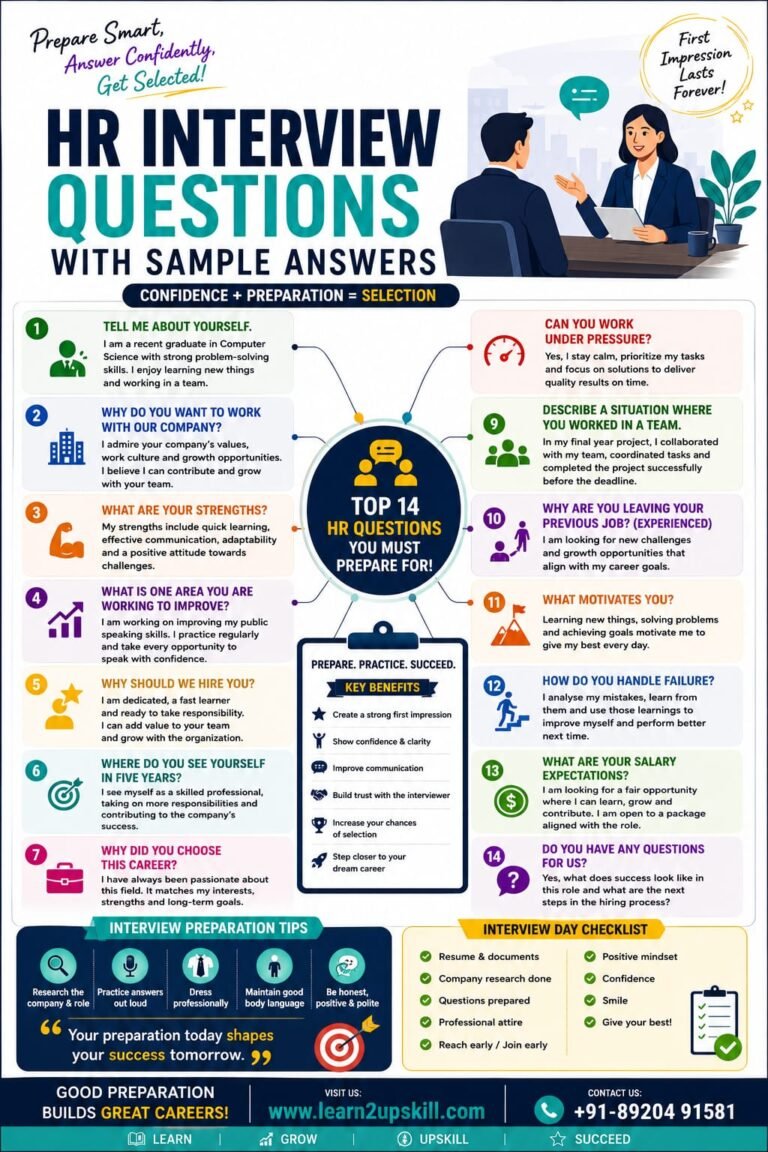
Step 6: Prepare for HR Interviews
Common HR questions include:
– Tell me about yourself.
– Why should we hire you?
– What are your strengths?
– What is one area you are working to improve?
– Where do you see yourself in five years?
– Why do you want to join our company?
Practice your answers aloud to improve confidence.
—
Step 7: Work on Personality Development
Employers value candidates who are:
– Confident
– Positive
– Responsible
– Adaptable
– Honest
– Professional
– Team-oriented
Personality development plays a major role in placement success.
—
Step 8: Build Professional Etiquette
Professional behavior includes:
– Dressing appropriately.
– Arriving on time.
– Being respectful.
– Maintaining eye contact.
– Using polite language.
– Sending thank-you emails after interviews (where appropriate).
Good etiquette leaves a lasting impression.
—
Step 9: Practice Mock Interviews
Mock interviews help you:
– Improve confidence.
– Identify weak areas.
– Reduce nervousness.
– Improve body language.
– Receive constructive feedback.
Practice with mentors, teachers, or friends.
—
Step 10: Stay Updated
Recruiters appreciate candidates who are aware of:
– Industry trends
– Emerging technologies
– Company updates
– Current affairs
– Market developments
Reading news and industry blogs daily helps you stay informed.
—
Common Placement Mistakes
Avoid these common errors:
– Poor resume formatting
– Lack of preparation
– Weak communication skills
– Negative attitude
– Arriving late
– Inappropriate dressing
– Lack of company research
– Overconfidence
– Poor body language
– Giving up after one rejection
Every interview is an opportunity to learn and improve.
—
Interview Day Checklist
Before your interview:
– ✔ Review your resume.
– ✔ Research the company.
– ✔ Carry all necessary documents.
– ✔ Dress professionally.
– ✔ Reach the venue early or join online on time.
– ✔ Keep your phone on silent.
– ✔ Maintain a positive attitude.
– ✔ Stay calm and confident.
Preparation reduces stress and boosts confidence.
—
Skills Employers Look For
Recruiters value candidates who demonstrate:
– Communication skills
– Problem-solving ability
– Teamwork
– Leadership
– Adaptability
– Time management
– Critical thinking
– Emotional intelligence
– Technical expertise
– Willingness to learn
Developing these skills gives you a competitive advantage.
—
Tips for Successful Placements
– Start preparing early.
– Build a strong LinkedIn profile.
– Complete internships.
– Earn industry-recognized certifications.
– Participate in workshops and competitions.
– Practice interviews regularly.
– Stay consistent and disciplined.
– Learn from every experience.
Success is the result of preparation and perseverance.
—
Conclusion
Interview and placement preparation is not just about clearing one interview—it is about building the skills and confidence needed for a successful career. By focusing on communication, technical knowledge, personality development, resume building, and interview practice, students can greatly improve their chances of getting hired.
Stay committed to continuous learning, believe in yourself, and keep improving every day. Your dream job is within reach when preparation meets opportunity.
At Learn2Upskill, we are committed to helping students become career-ready through expert guidance in career counselling, interview preparation, personality development, communication skills, resume writing, and placement training.
—
Contact Learn2Upskill
Website: www.learn2upskill.com
Contact Us: +91-89204 91581
Learn2Upskill – Learn. Grow. Succeed.
You May Also Like
The Complete Guide to Building Confidence and Success Introduction In today’s competitive world, academic knowledge alone is not enough to...
-
-
July 31, 2026
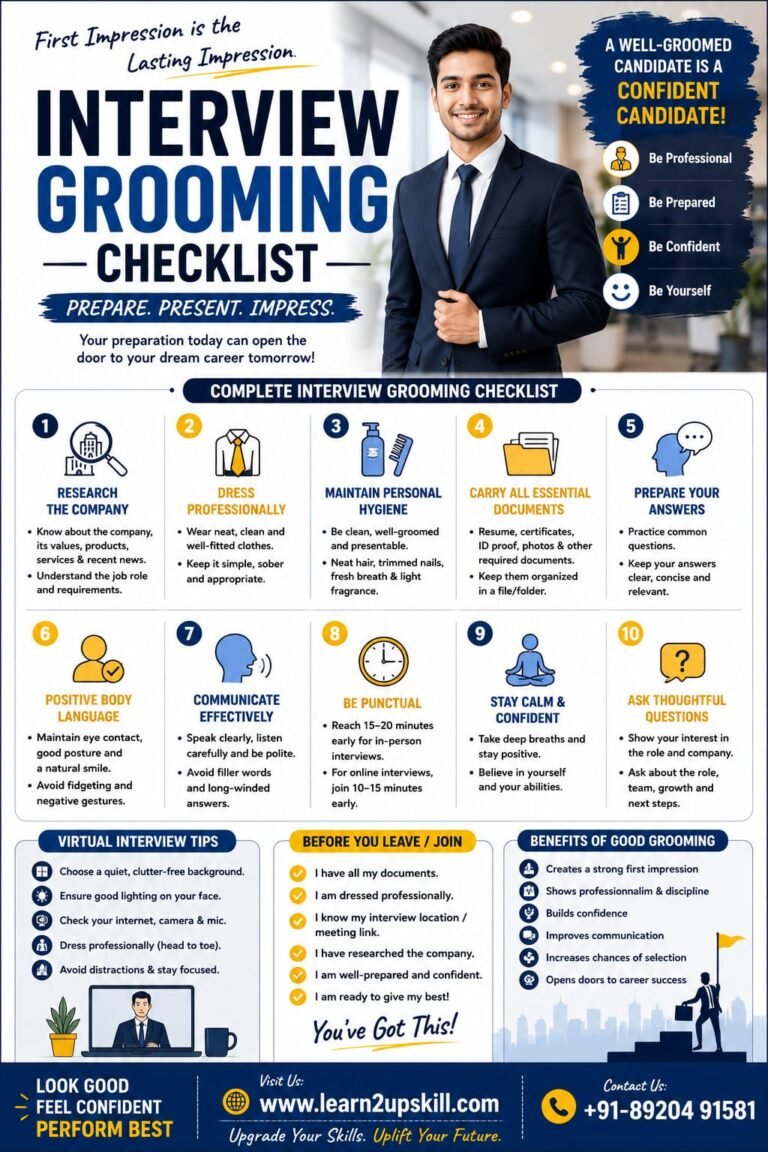
Interview Grooming Checklist Introduction Your interview begins long before you answer the first question. From the moment you enter the...
-
-
July 31, 2026
Top HR Interview Questions with Sample Answers Introduction An HR interview is often the final step in the hiring process...
-
-
July 30, 2026