

How to Build Self-Confidence as a Student
How to Build Self-Confidence as a Student
Introduction
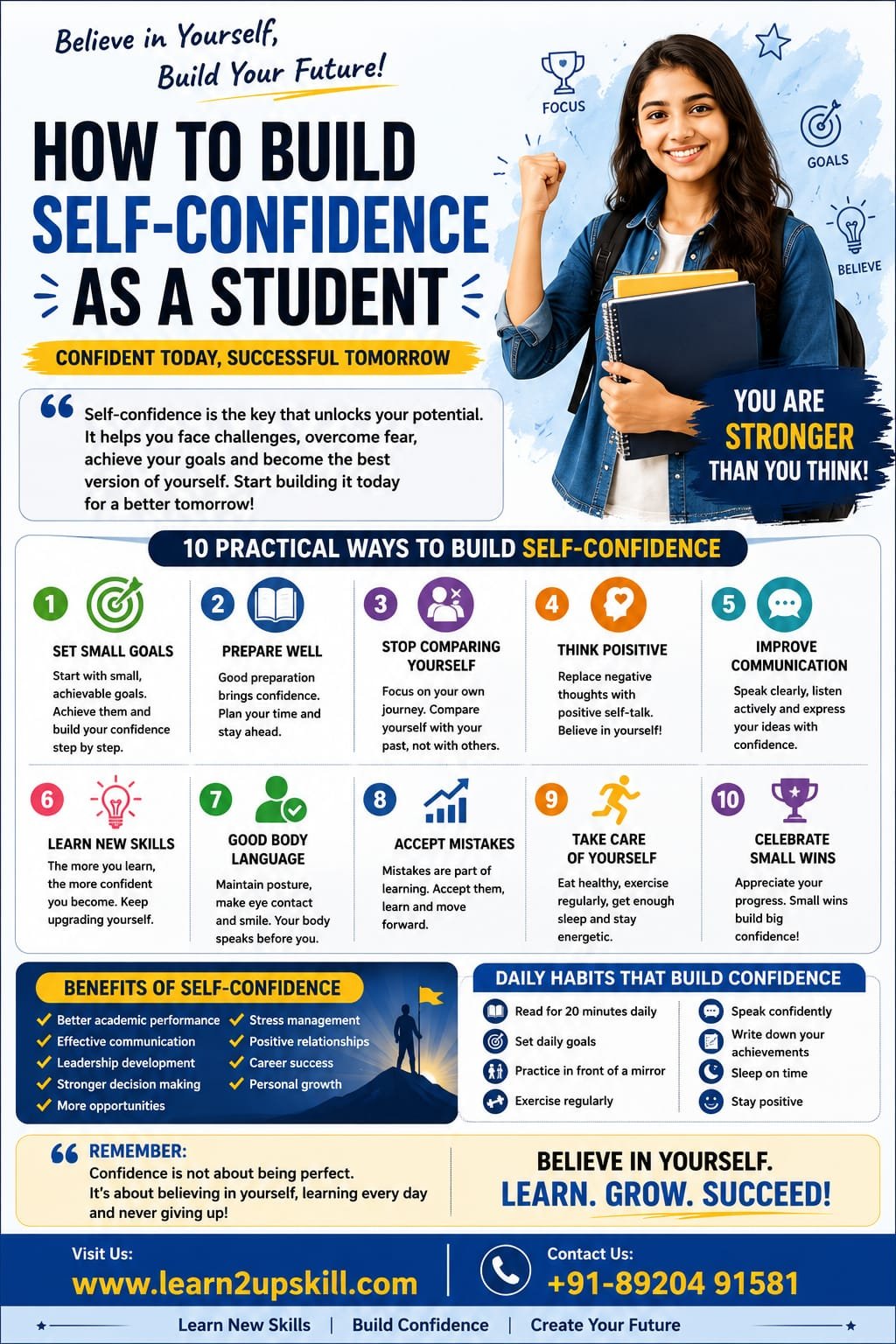
Self-confidence is one of the most valuable qualities a student can develop. It helps you participate actively in class, perform better in exams, communicate effectively, make informed decisions, and overcome challenges with a positive attitude. Confidence is not something people are born with—it is a skill that can be developed through consistent effort and practice.
Many students struggle with self-doubt, fear of failure, and comparison with others. The good news is that confidence grows with every small achievement and every new experience.
At Learn2Upskill, we believe that building self-confidence is just as important as gaining academic knowledge. A confident student is better prepared to face future opportunities and succeed in both personal and professional life.
—
What Is Self-Confidence?
Self-confidence is the belief in your own abilities, strengths, and potential. It means trusting yourself to handle challenges, learn from mistakes, and keep moving forward even when things become difficult.
Confidence is not about being perfect. It is about believing that you can learn, improve, and grow.
—
Why Is Self-Confidence Important for Students?
A confident student is more likely to:
– Participate actively in classroom discussions.
– Perform better in exams and presentations.
– Develop leadership qualities.
– Communicate effectively with teachers and classmates.
– Handle criticism positively.
– Take on new challenges without fear.
– Build healthy relationships.
– Stay motivated and focused on goals.
Confidence creates a strong foundation for lifelong success.
—
Common Reasons Students Lack Confidence
Many students lose confidence because of:
– Fear of failure
– Comparing themselves with others
– Negative self-talk
– Lack of preparation
– Poor communication skills
– Fear of public speaking
– Past failures
– Bullying or criticism
– Unrealistic expectations
Recognizing these causes is the first step toward overcoming them.
—
Practical Ways to Build Self-Confidence
- Set Small and Achievable Goals
Break large goals into smaller tasks. Every completed task gives you a sense of achievement and motivates you to keep improving.
—
- Prepare Well
Confidence comes from preparation. Whether it is an exam, presentation, or interview, proper preparation reduces anxiety and improves performance.
—
- Stop Comparing Yourself with Others
Everyone has a unique learning journey. Instead of comparing yourself with classmates, focus on improving your own skills and celebrating your progress.
—
- Develop Positive Self-Talk
Replace negative thoughts like “I can’t do this” with positive ones such as:
– I am learning every day.
– I can improve with practice.
– I believe in my abilities.
– Every mistake helps me grow.
Positive thinking builds inner confidence.
—
- Improve Your Communication Skills
Practice speaking clearly and confidently. Participate in classroom discussions, group activities, debates, and presentations to improve your communication.
—
- Learn New Skills
Every new skill you learn increases your confidence. Explore areas like:
– Public speaking
– Digital skills
– Artificial Intelligence (AI)
– Coding
– Digital marketing
– Graphic design
– Microsoft Excel
– Leadership skills
Learning keeps you motivated and future-ready.
—
- Practice Good Body Language
Your body language affects how you feel and how others perceive you.
Maintain:
– Good posture
– Eye contact
– A genuine smile
– Calm gestures
– Confident walking style
Positive body language reflects confidence.
—
- Accept Mistakes as Learning Opportunities
No one succeeds without making mistakes. Instead of fearing failure, treat every setback as a lesson that helps you become stronger and wiser.
—
- Take Care of Your Health
A healthy body supports a confident mind.
Make sure to:
– Sleep 7–8 hours.
– Eat nutritious food.
– Exercise regularly.
– Stay hydrated.
– Limit excessive screen time.
Good health improves concentration, energy, and confidence.
—
- Celebrate Small Wins
Every achievement matters, whether it’s completing an assignment, improving your grades, or speaking confidently in class. Celebrate your progress to stay motivated.
—
Daily Habits That Build Confidence
Develop these simple habits:
– Read for 20 minutes every day.
– Learn one new skill each month.
– Speak in English or your preferred language confidently.
– Practice in front of a mirror.
– Exercise regularly.
– Maintain personal grooming.
– Write down three achievements every evening.
– Stay away from negative influences.
Consistency is the key to lasting confidence.
—
Confidence During Exams
To stay confident during exams:
– Create a study timetable.
– Revise regularly.
– Solve previous years’ question papers.
– Avoid last-minute cramming.
– Stay calm and trust your preparation.
– Get enough sleep before the exam.
Remember, confidence comes from consistent preparation.
—
Confidence During Interviews
If you’re preparing for college admissions, internships, or jobs:
– Research the organization.
– Practice common interview questions.
– Dress neatly and professionally.
– Speak clearly and confidently.
– Maintain eye contact.
– Smile naturally.
– Believe in your abilities.
Interview confidence improves with practice.
—
Mistakes That Reduce Confidence
Avoid these common habits:
– Comparing yourself constantly
– Negative thinking
– Fear of asking questions
– Avoiding challenges
– Giving up after one failure
– Poor time management
– Ignoring feedback
– Lack of preparation
Replacing these habits with positive actions can make a big difference.
—
Benefits of Self-Confidence
Strong self-confidence helps students:
– Improve academic performance
– Build leadership skills
– Communicate effectively
– Make better decisions
– Reduce stress and anxiety
– Face challenges with courage
– Perform better in interviews
– Build stronger relationships
– Achieve personal and career goals
—
Conclusion
Self-confidence is not built overnight. It develops through continuous learning, practice, preparation, and a positive mindset. Every student has the potential to become confident by believing in themselves and taking small, consistent steps toward improvement.
Remember, success does not come from never making mistakes—it comes from learning, growing, and never giving up.
At Learn2Upskill, we are committed to helping students build confidence, develop essential life skills, improve communication, and prepare for successful careers through expert training and career guidance.
—
Contact Learn2Upskill
Website: www.learn2upskill.com
Contact Us: +91-89204 91581
Learn2Upskill – Learn. Grow. Succeed.
You May Also Like
Top 10 Chat GPT Prompts Every Student Should Know Discover the best Chat GPT prompts for students. Learn how to...
-
-
July 13, 2026