

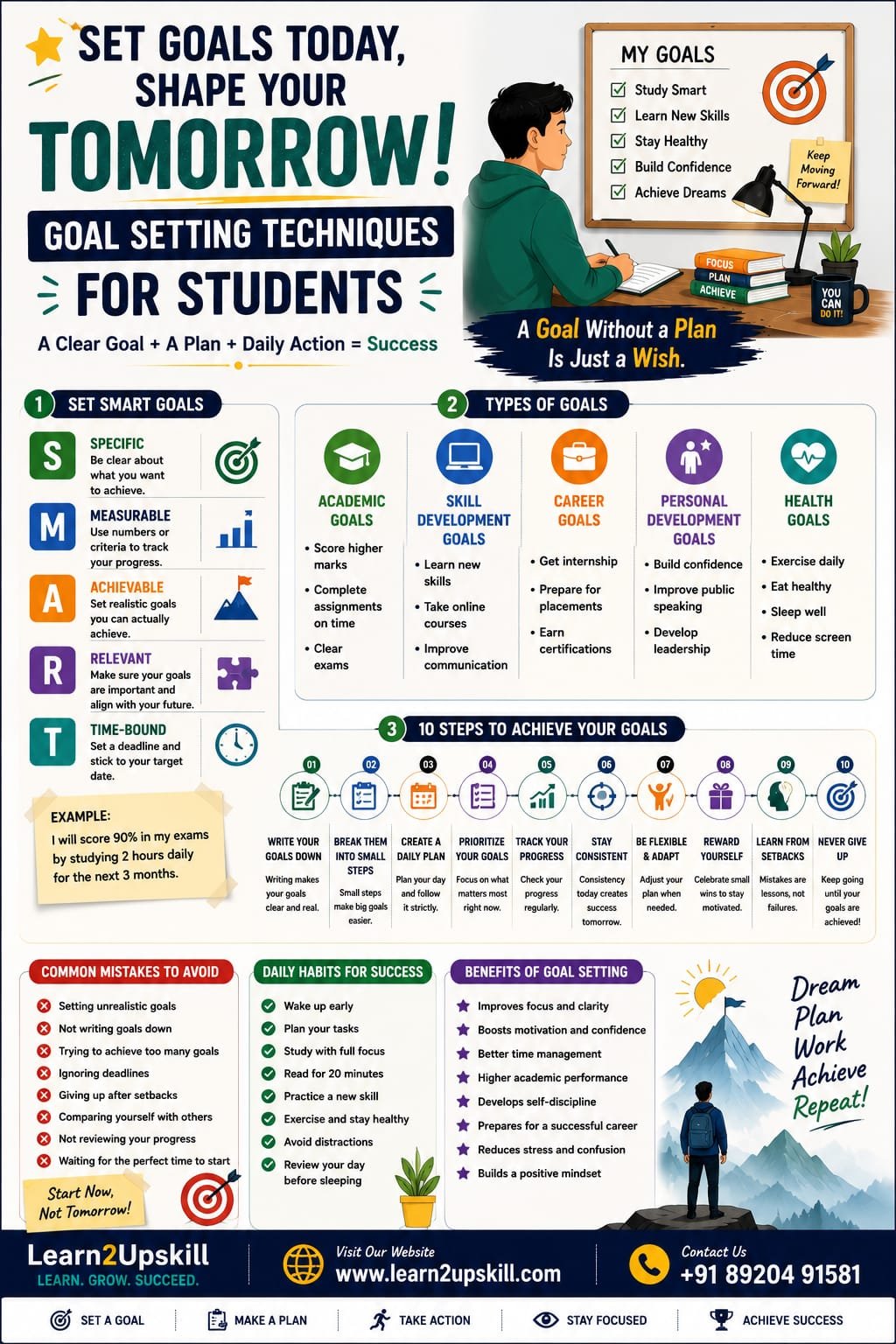
Goal Setting Techniques for Students
Goal Setting Techniques for Students
Introduction
Every successful student has one thing in common—they have clear goals. Whether it’s scoring higher marks, learning a new skill, getting into a dream college, or securing a great job, goals provide direction and purpose. Without goals, students often lose focus, waste time, and struggle to stay motivated.
Goal setting is not just about writing down what you want to achieve. It is about creating a practical plan, staying committed, and taking consistent action. When students set meaningful goals, they become more organized, confident, and prepared to face challenges.
At Learn2Upskill, we believe that goal setting is one of the most powerful life skills. It helps students stay focused, build discipline, and prepare for long-term academic and career success.
—
What Is Goal Setting?
Goal setting is the process of identifying what you want to achieve and creating a step-by-step plan to reach it. A goal gives you a clear target and motivates you to work consistently toward success.
Goals can be related to:
– Academic performance
– Career planning
– Skill development
– Health and fitness
– Personality development
– Financial management
– Personal growth
Having clear goals makes it easier to prioritize your time and efforts.
—
Why Is Goal Setting Important for Students?
Setting goals helps students:
– Stay focused on their priorities.
– Improve academic performance.
– Develop self-discipline.
– Increase motivation.
– Manage time effectively.
– Build confidence.
– Reduce stress caused by uncertainty.
– Track progress and celebrate achievements.
– Prepare for future careers.
Students with clear goals are more likely to stay committed to their learning journey.
—
Types of Goals Every Student Should Set
- Academic Goals
Examples:
– Improve mathematics scores.
– Read one book every month.
– Complete assignments before deadlines.
– Score above 90% in examinations.
—
- Skill Development Goals
Examples:
– Learn Microsoft Excel.
– Complete a Digital Marketing course.
– Improve English communication.
– Learn Artificial Intelligence (AI) basics.
– Develop coding skills.
—
- Career Goals
Examples:
– Get an internship.
– Build a professional LinkedIn profile.
– Prepare for campus placements.
– Earn industry-recognized certifications.
—
- Personal Development Goals
Examples:
– Improve public speaking.
– Build self-confidence.
– Develop leadership skills.
– Practice positive thinking.
—
- Health Goals
Examples:
Exercise for 30 minutes daily.
– Sleep 7–8 hours every night.
– Eat healthy meals.
– Reduce excessive screen time.
Good health supports better learning and productivity.
—
Effective Goal Setting Techniques
- Set SMART Goals
One of the most effective methods is the SMART framework. Your goals should be:
– Specific – Clearly define what you want to achieve.
– Measurable – Track your progress.
– Achievable – Set realistic goals.
– Relevant – Align them with your priorities.
– Time-bound – Give yourself a deadline.
Example:
Instead of saying, “I want better grades,” say, “I will improve my mathematics score from 75% to 90% by the end of this semester by studying one hour every day.”
—
- Write Down Your Goals
Writing your goals makes them more concrete and keeps you accountable. Keep them in a notebook, planner, or digital app where you can review them regularly.
—
- Break Big Goals into Small Steps
Large goals can feel overwhelming. Divide them into smaller tasks that you can complete daily or weekly.
For example:
Goal: Learn Microsoft Excel.
Steps:
– Learn basic formulas.
– Practice charts.
– Master Pivot Tables.
– Build sample dashboards.
– Complete an online certification.
Small wins build momentum.
—
- Prioritize Your Goals
Not all goals are equally important. Focus on what will have the greatest impact on your studies and future career.
Ask yourself:
– Which goal is most urgent?
– Which goal supports my long-term career?
– What can I start today?
—
- Create a Daily Action Plan
Your goals should become part of your daily routine.
Example:
– Study for one hour.
– Read for 20 minutes.
– Practice communication skills.
– Complete one online lesson.
– Revise class notes.
Consistent daily actions lead to long-term success.
—
- Track Your Progress
Review your progress every week.
Ask yourself:
– What did I accomplish?
– What challenges did I face?
– What should I improve next week?
Tracking progress keeps you motivated.
—
- Stay Flexible
Sometimes circumstances change, and goals may need adjustment. Review your goals regularly and update them when necessary without losing sight of your long-term vision.
—
- Reward Yourself
Celebrate achievements, even small ones.
Examples:
– Take a short break.
– Watch a favorite movie.
– Spend time with family or friends.
– Buy yourself a book.
Rewards help maintain motivation.
—
- Learn from Failures
Not every goal will be achieved on the first attempt. Treat setbacks as opportunities to learn and improve.
Failure is not the end—it is part of the learning process.
—
- Stay Consistent
Consistency matters more than perfection. Small daily efforts create remarkable long-term results.
Even 30 minutes of focused learning every day can make a significant difference over time.
—
Common Goal Setting Mistakes
Avoid these mistakes:
– Setting unrealistic goals
– Not writing goals down
– Trying to achieve too many goals at once
– Ignoring deadlines
– Giving up after setbacks
– Comparing yourself with others
– Not reviewing progress
– Waiting for the “perfect” time to start
The best time to begin is today.
—
Daily Habits That Help You Achieve Your Goals
Develop these habits:
– Wake up early.
– Plan your day.
– Read for at least 20 minutes.
– Practice one new skill regularly.
– Exercise daily.
– Stay organized.
– Limit distractions.
– Reflect on your progress before sleeping.
Small habits build extraordinary results.
—
Benefits of Goal Setting
Effective goal setting helps students:
– Improve academic performance
– Build self-confidence
– Develop discipline
– Manage time efficiently
– Stay motivated
– Improve decision-making
– Reduce stress
– Prepare for successful careers
– Develop lifelong learning habits
Goal setting transforms dreams into achievable plans.
—
Conclusion
Success does not happen by chance—it begins with clear goals and consistent action. Whether you want to excel in academics, build valuable skills, prepare for placements, or grow personally, goal setting provides the direction you need.
Start with one meaningful goal today, create a practical plan, and take one step at a time. Every small effort brings you closer to achieving your dreams.
At Learn2Upskill, we are committed to helping students achieve academic excellence and career success through career counselling, personality development, communication skills training, interview preparation, professional grooming, and industry-relevant skill development programs.
—
Contact Learn2Upskill
Website: www.learn2upskill.com
Contact Us: +91-89204 91581
Learn2Upskill – Learn. Grow. Succeed.
You May Also Like
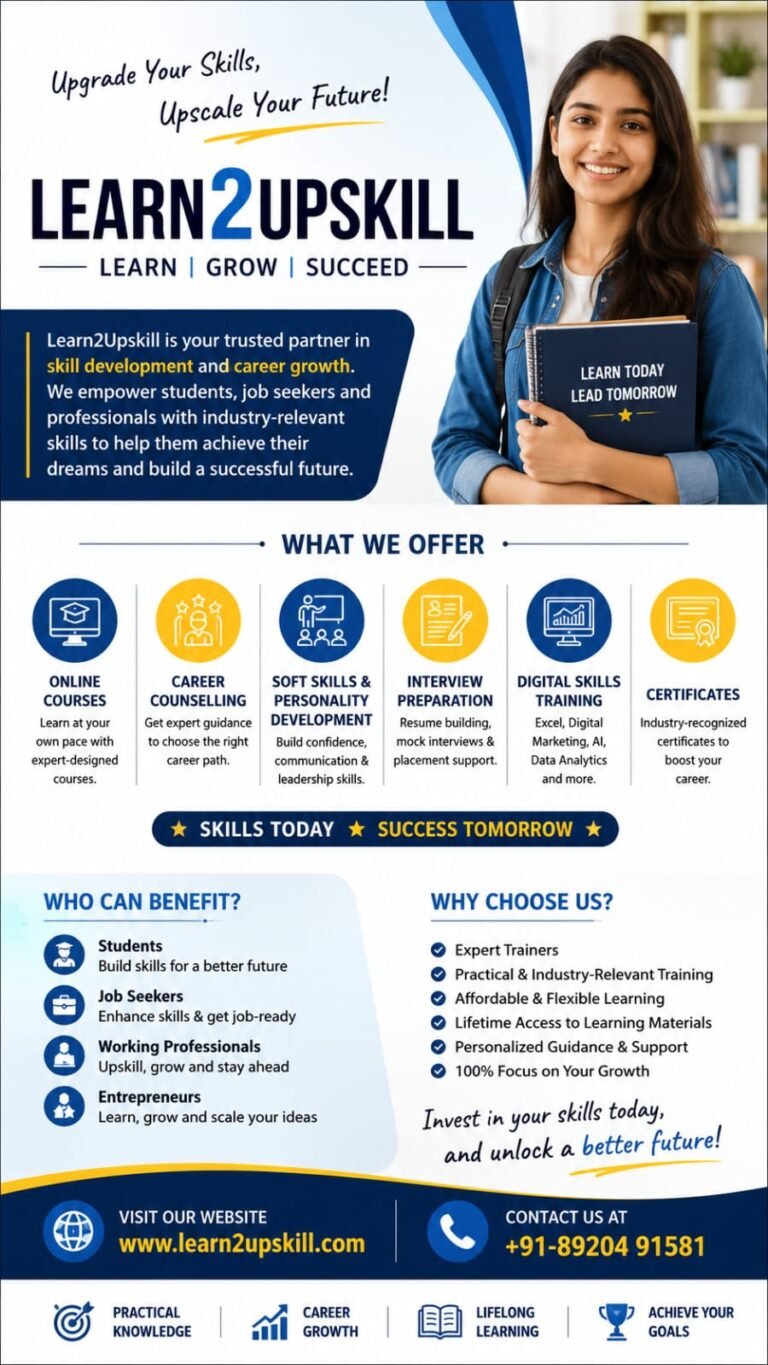
The Complete Guide to Building Confidence and Success Introduction In today’s competitive world, academic knowledge alone is not enough to...
-
-
July 31, 2026
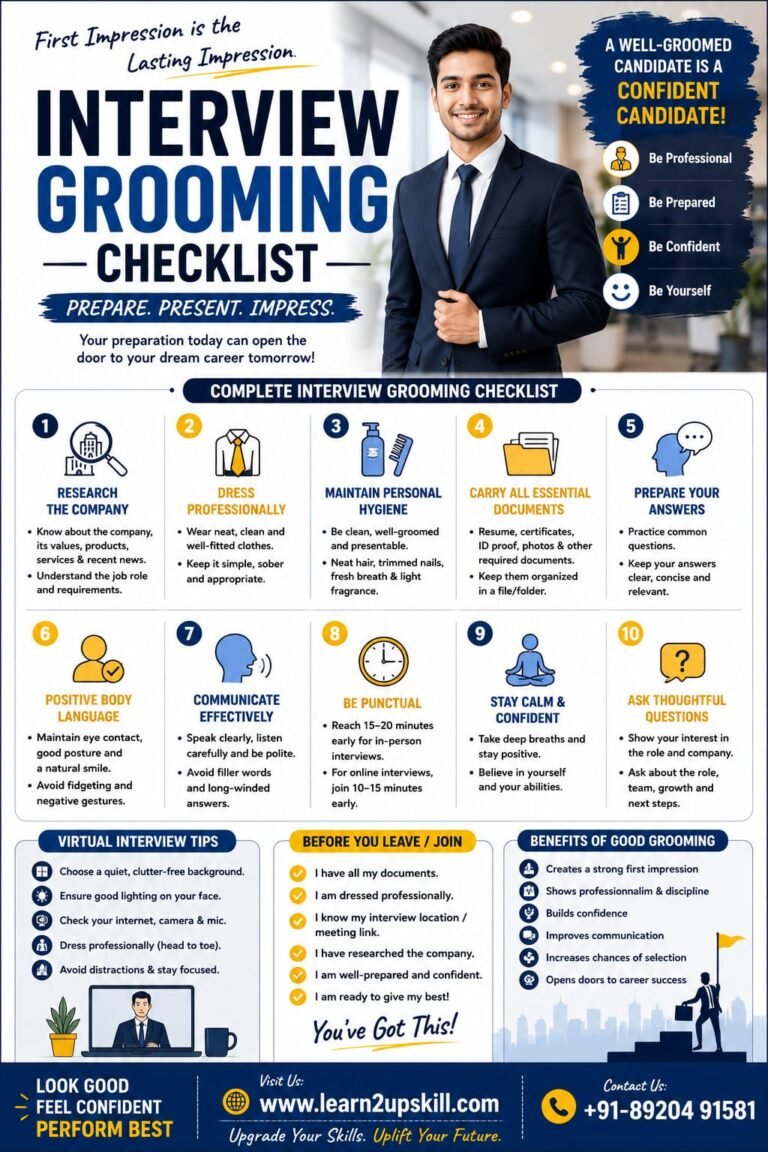
Interview Grooming Checklist Introduction Your interview begins long before you answer the first question. From the moment you enter the...
-
-
July 31, 2026
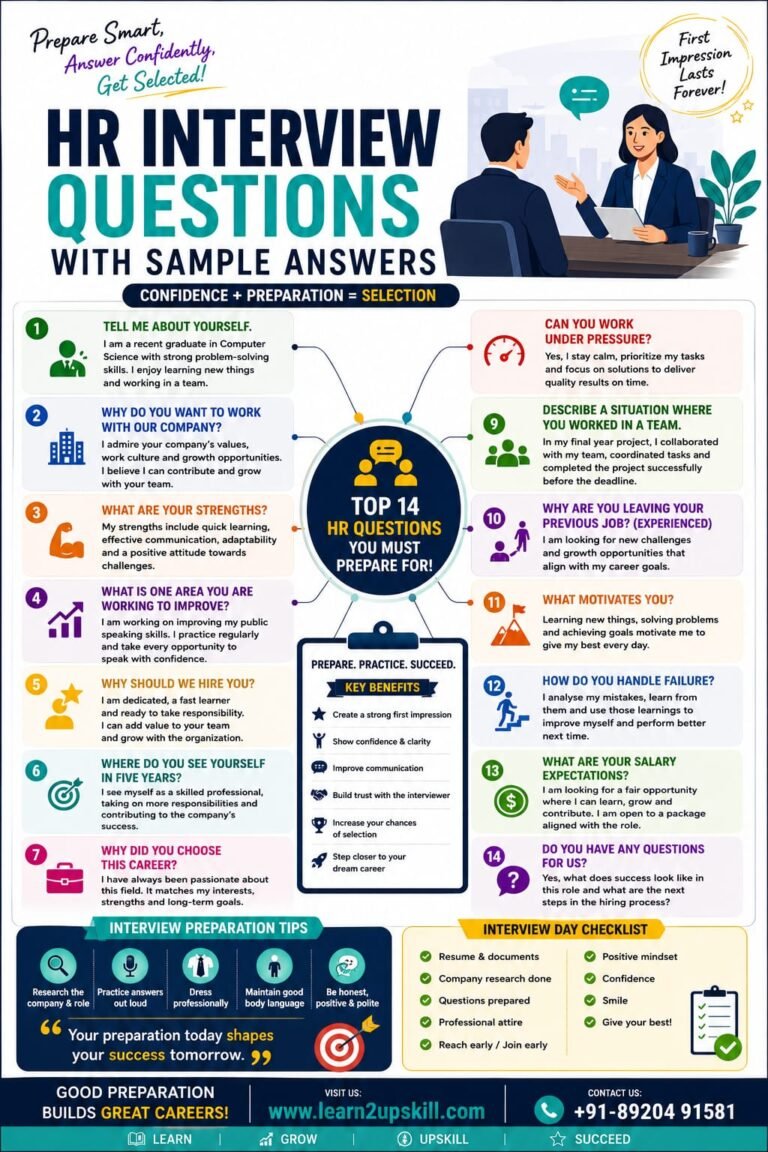
Top HR Interview Questions with Sample Answers Introduction An HR interview is often the final step in the hiring process...
-
-
July 30, 2026