

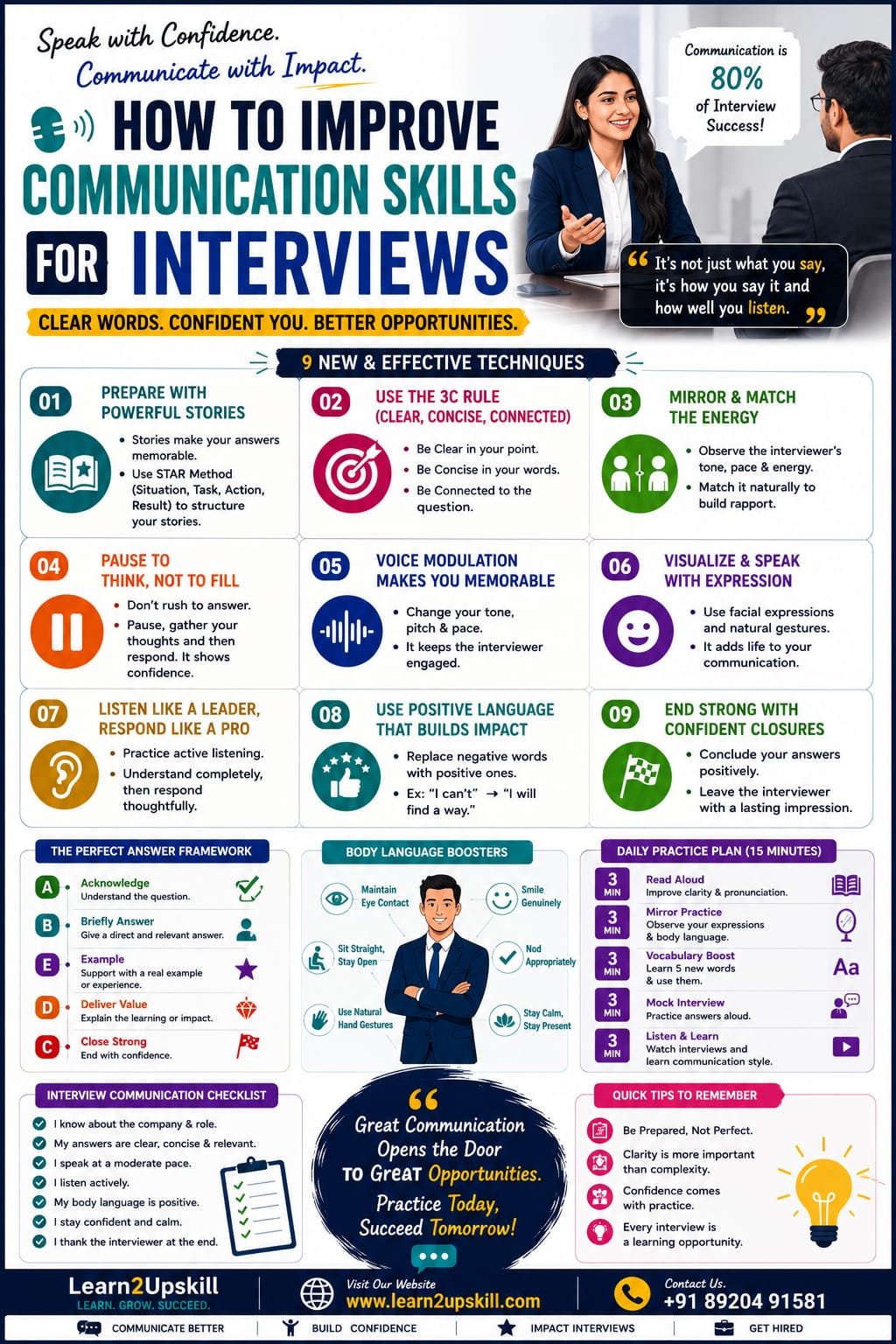
How to Improve Communication Skills for Interviews
How to Improve Communication Skills for Interviews
Introduction
Communication skills are one of the most important qualities employers look for during interviews. Even if you have excellent academic qualifications and technical knowledge, poor communication can reduce your chances of getting selected. On the other hand, candidates who communicate clearly, confidently, and professionally often leave a strong and lasting impression.
Communication in an interview is not just about speaking—it also includes listening, body language, confidence, tone of voice, and the ability to express your thoughts effectively. The good news is that communication is a skill that can be learned and improved with regular practice.
At Learn2Upskill, we help students, fresh graduates, and job seekers build strong communication skills, confidence, and interview readiness to achieve their career goals.
—
Why Are Communication Skills Important in Interviews?
Recruiters evaluate your communication to understand:
– Your confidence
– Clarity of thought
– Professionalism
– Listening ability
– Problem-solving approach
– Teamwork skills
– Leadership potential
– Customer interaction skills
– Overall personality
Strong communication helps employers trust that you can represent the organization effectively.
—
Common Communication Mistakes During Interviews
Many candidates lose opportunities because they:
– Speak too fast.
– Speak too softly.
– Give very long answers.
– Use filler words like “um” or “you know” repeatedly.
– Interrupt the interviewer.
– Avoid eye contact.
– Fail to listen carefully.
– Give unclear or confusing answers.
– Show nervous body language.
– Use informal language.
Identifying these mistakes is the first step toward improvement.
—
1. Prepare Before the Interview
Good communication begins with preparation.
Research:
– The company
– The job role
– The industry
– Common interview questions
Preparation helps you answer confidently and reduces nervousness.
—
2. Practice Speaking Clearly
Speak at a moderate pace.
Remember to:
– Pronounce words clearly.
– Pause briefly between ideas.
– Avoid rushing your answers.
– Keep your tone calm and confident.
Clear speech makes your message easier to understand.
—
3. Improve Your Vocabulary
You don’t need complicated words, but using professional language improves your communication.
Read:
– Newspapers
– Business magazines
– Career blogs
– Books
Learning new words regularly helps you express ideas more effectively.
—
4. Listen Actively
Communication is a two-way process.
Before answering:
– Listen carefully.
– Allow the interviewer to finish speaking.
– Think for a moment.
– Answer only what was asked.
Good listening demonstrates respect and professionalism.
—
5. Maintain Positive Body Language
Your body language speaks before your words.
Maintain:
– Eye contact
– Good posture
– Natural smile
– Relaxed shoulders
– Gentle hand gestures
Avoid:
– Crossing your arms
– Looking at the floor
– Fidgeting
– Checking your phone
– Slouching
Positive body language reinforces your spoken message.
—
6. Practice Common Interview Questions
Prepare answers for questions such as:
– Tell me about yourself.
– Why should we hire you?
– What are your strengths?
– What is one area you are working to improve?
– Why do you want to join our company?
– Where do you see yourself in five years?
Practice aloud until your answers sound natural.
—
7. Think Before You Speak
Take a brief pause before answering difficult questions.
This helps you:
– Organize your thoughts.
– Avoid unnecessary words.
– Give structured answers.
– Reduce nervousness.
A thoughtful pause is perfectly acceptable.
—
8. Keep Your Answers Structured
A simple structure works well:
– Introduce your main point.
– Explain briefly.
– Give an example if appropriate.
– Conclude clearly.
Well-organized answers are easier to follow and remember.
—
9. Build Confidence Through Practice
Confidence improves with repetition.
Practice by:
– Speaking in front of a mirror.
– Recording yourself.
– Participating in group discussions.
– Giving presentations.
– Taking mock interviews.
Every practice session strengthens your communication.
—
10. Improve Your English Communication (If Needed)
If interviews are conducted in English:
– Read English articles daily.
– Watch English news.
– Speak English with friends.
– Learn five new words each day.
– Practice answering interview questions in English.
Consistency leads to improvement.
—
Communication Tips for Online Interviews
Virtual interviews require extra attention.
Before joining:
– Test your microphone and camera.
– Ensure good internet connectivity.
– Sit in a quiet, well-lit place.
– Look into the camera while speaking.
– Avoid distractions.
Professional online communication is equally important.
—
Daily Habits to Improve Communication
Develop these habits:
– Read for 20 minutes every day.
– Practice speaking aloud.
– Learn one new word daily.
– Listen to quality podcasts or speeches.
– Participate in discussions.
– Maintain good posture.
– Observe confident speakers.
– Ask for constructive feedback.
Small daily improvements create long-term confidence.
—
Communication Skills Employers Value
Recruiters appreciate candidates who can:
– Speak clearly
– Listen actively
– Explain ideas logically
– Remain calm under pressure
– Communicate respectfully
– Work well in teams
– Resolve conflicts professionally
– Build positive relationships
These skills are valuable in every profession.
—
Interview Day Communication Checklist
Before and during the interview:
– ✔ Greet the interviewer politely.
– ✔ Smile naturally.
– ✔ Maintain eye contact.
– ✔ Listen carefully.
– ✔ Speak clearly and confidently.
– ✔ Keep answers concise.
– ✔ Avoid interrupting.
– ✔ Thank the interviewer before leaving.
These small habits create a positive impression.
—
Benefits of Strong Communication Skills
Good communication helps you:
– Perform better in interviews.
– Build confidence.
– Create a strong first impression.
– Improve leadership skills.
– Strengthen teamwork.
– Build professional relationships.
– Increase career opportunities.
– Achieve long-term success.
Communication is one of the most valuable career skills.
—
Conclusion
Improving communication skills is one of the best investments you can make in your future. It not only helps you perform well in interviews but also supports academic success, professional growth, leadership, and personal development.
Remember, effective communication is not about speaking perfectly—it is about expressing your ideas clearly, listening actively, and interacting with confidence and respect. Practice consistently, stay positive, and keep learning.
At Learn2Upskill, we are committed to helping students and job seekers develop communication skills, interview confidence, personality development, career counselling, and professional grooming so they can achieve their academic and career goals.
—
Contact Learn2Upskill
Website: www.learn2upskill.com
Contact Us: +91-89204 91581
Learn2Upskill – Learn. Grow. Succeed.
You May Also Like
The Complete Guide to Building Confidence and Success Introduction In today’s competitive world, academic knowledge alone is not enough to...
-
-
July 31, 2026
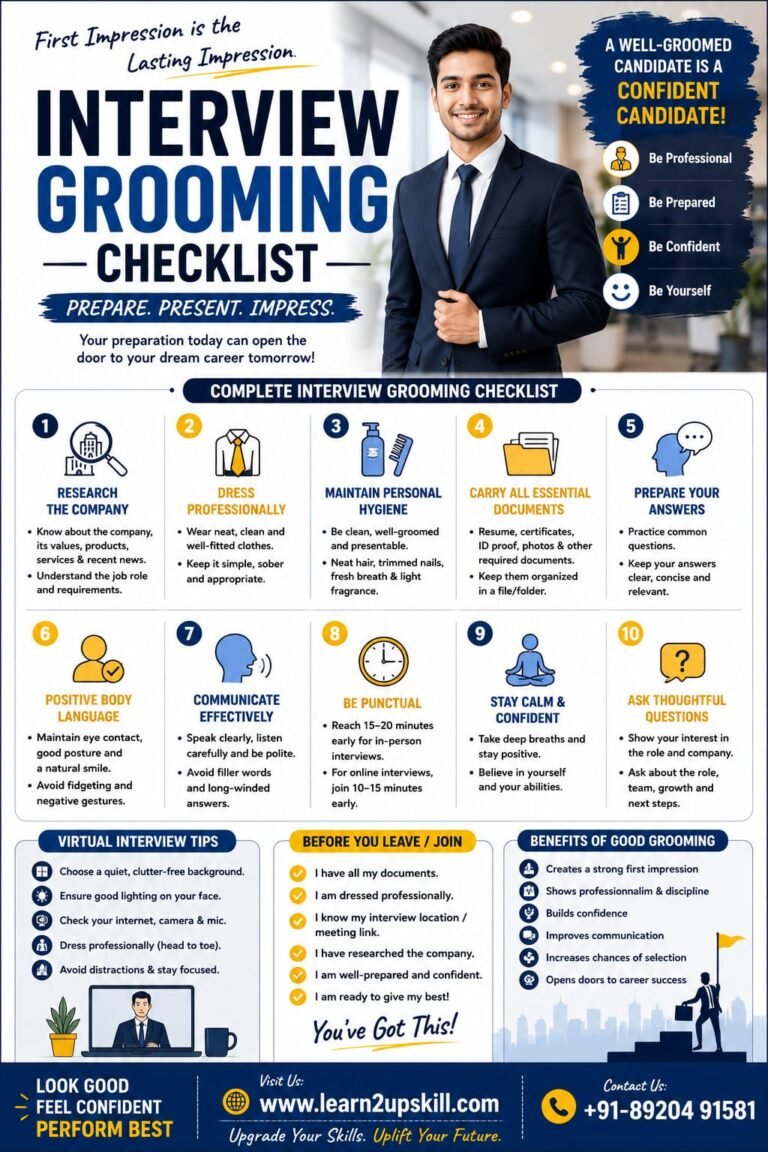
Interview Grooming Checklist Introduction Your interview begins long before you answer the first question. From the moment you enter the...
-
-
July 31, 2026
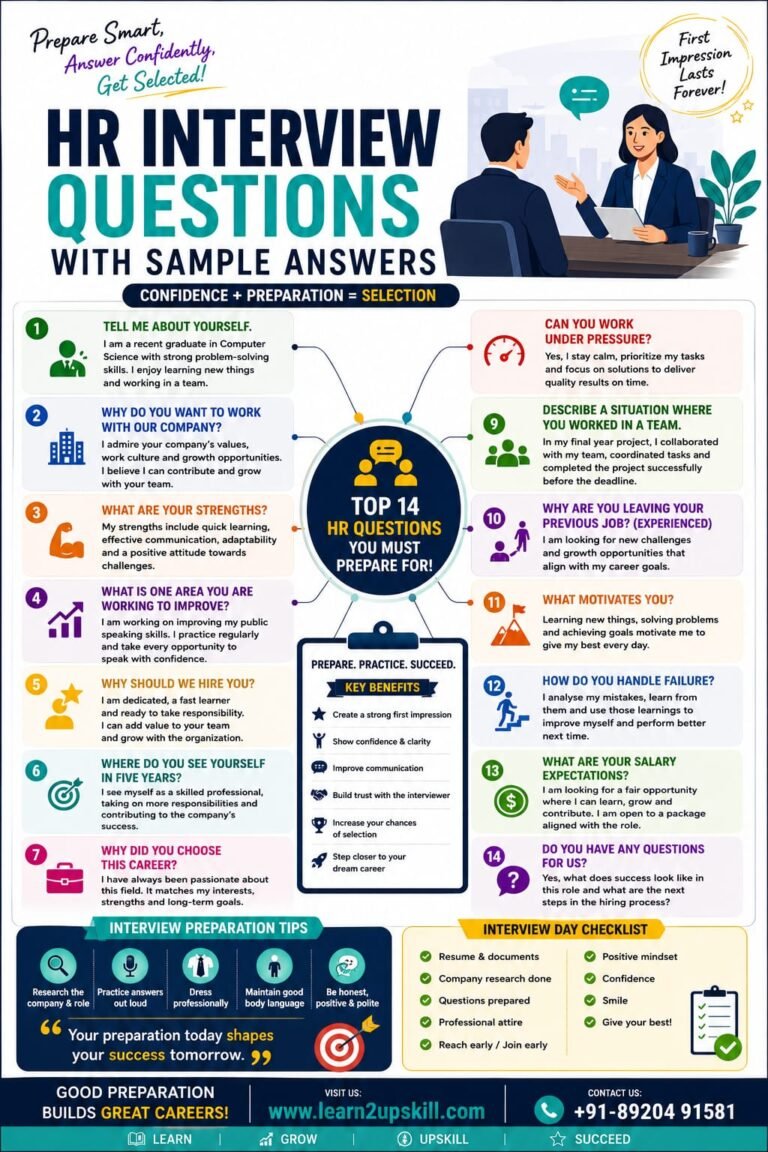
Top HR Interview Questions with Sample Answers Introduction An HR interview is often the final step in the hiring process...
-
-
July 30, 2026