

Signs Your Child Needs Career Counselling
Signs Your Child Needs Career Counselling
Learn the common signs that your child may need career counselling. Discover how career guidance helps students choose the right career path, reduce confusion, and build a successful future.
Focus Keyword: Signs Your Child Needs Career Counselling
—
Signs Your Child Needs Career Counselling
Every parent wants their child to have a successful and fulfilling career. However, with thousands of career options, changing industry demands, and increasing competition, many students feel overwhelmed when deciding what to do after school or college.
Career counselling provides structured guidance that helps students understand themselves, explore career options, and make informed decisions based on their interests, abilities, and goals.
But how do you know when your child actually needs career counselling?
In this guide, we’ll discuss the most common signs, the benefits of career counselling, and how parents can support their children through this important stage of life.
—
What Is Career Counselling?
Career counselling is a professional process that helps students:
– Discover their interests
– Identify strengths and abilities
– Understand personality traits
– Explore suitable career options
– Choose the right courses
– Set career goals
– Build confidence in decision-making
It is not about choosing a career for the student—it is about helping them make informed and confident choices.
—
Why Career Counselling Is Important Today
The career landscape has changed dramatically in recent years. In addition to traditional careers, students now have opportunities in:
– Artificial Intelligence
– Data Analytics
– Cybersecurity
– Digital Marketing
– UI/UX Design
– Cloud Computing
– Content Creation
– Entrepreneurship
– Healthcare
– Finance
– Environmental Sciences
With so many choices, students often need guidance to identify the options that best match their interests and strengths.
—
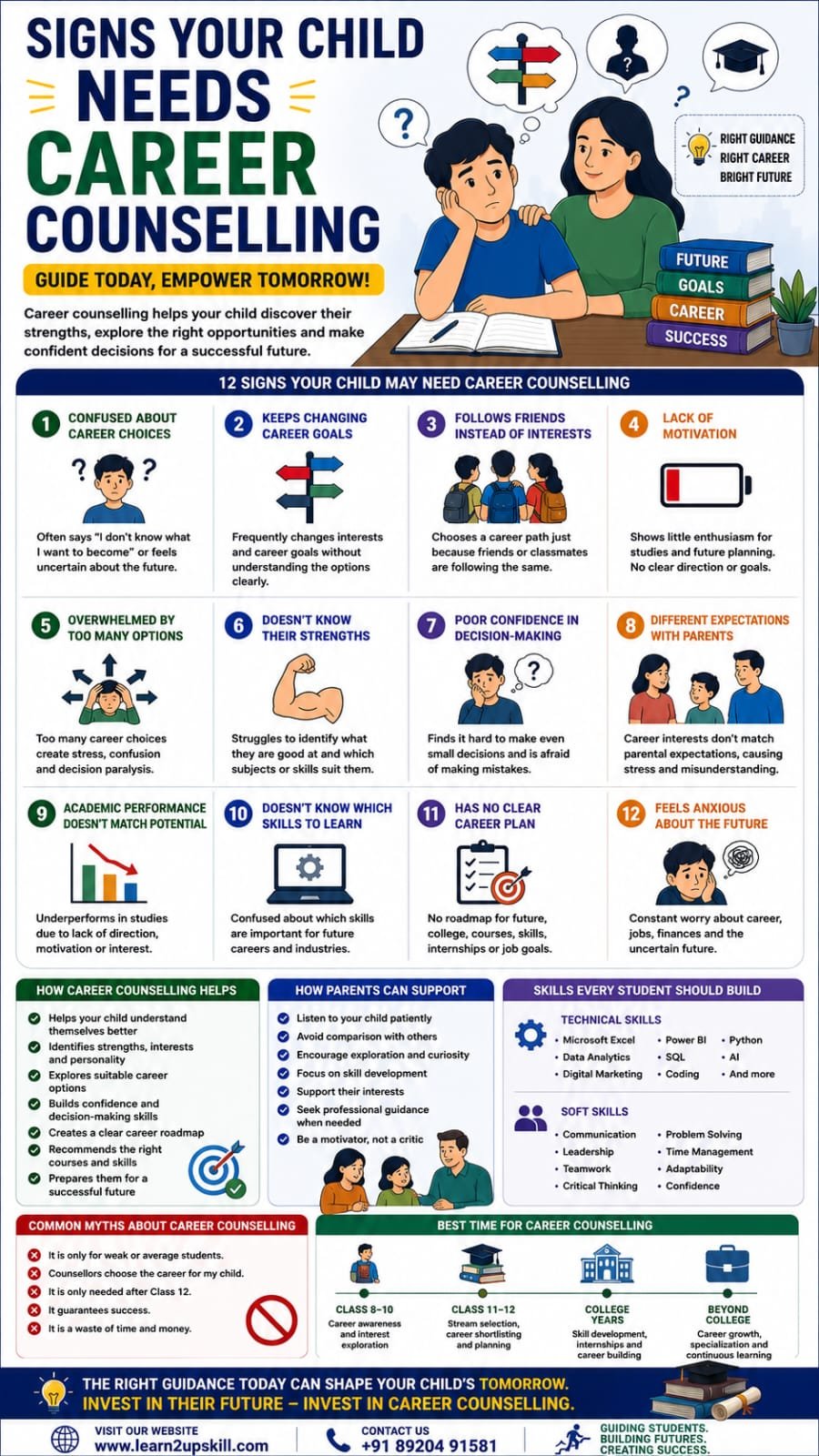
Sign 1: Your Child Is Confused About Career Choices
One of the biggest indicators is uncertainty.
Your child may frequently say:
– “I don’t know what I want to become.”
– “Every career sounds interesting.”
– “I’m scared of choosing the wrong field.”
– “I keep changing my mind.”
Career counselling can help bring clarity through structured exploration and planning.
—
Sign 2: They Keep Changing Career Goals
One week they want to become an engineer.
Next month they want to become a designer.
Later they want to start a business.
Changing interests is natural, especially during adolescence. However, if your child frequently switches career goals without understanding what each path involves, counselling can help them make more informed decisions.
—
Sign 3: They Follow Friends Instead of Their Interests
Many students choose careers simply because:
– Their friends selected them.
– Their classmates are preparing for the same entrance exams.
– They fear missing out.
Career decisions should be based on individual strengths, interests, and long-term aspirations—not peer pressure.
—
Sign 4: Lack of Motivation
If your child:
– Shows little enthusiasm for studies.
– Doesn’t seem interested in future planning.
– Avoids discussing career topics.
It may be because they don’t yet see a meaningful connection between their education and future opportunities.
Career counselling can help students discover goals that motivate them.
—
Sign 5: They Feel Overwhelmed by Career Options
Today’s students can choose from hundreds of career paths.
Too many choices can lead to:
– Stress
– Decision paralysis
– Anxiety
– Self-doubt
A counsellor helps narrow down options based on the student’s profile and aspirations.
—
Sign 6: They Don’t Know Their Strengths
Many students struggle to answer questions such as:
– What am I good at?
– What are my natural talents?
– Which subjects suit me best?
Career counselling often includes self-assessment activities that help students better understand their strengths and areas for growth.
—
Sign 7: Poor Confidence in Decision-Making
Students may hesitate to make decisions because they fear making mistakes.
You might notice:
– Constantly asking others what they should do.
– Difficulty making even small academic choices.
– Worrying excessively about the future.
Counselling can help build confidence and decision-making skills.
—
Sign 8: Parents and Child Have Different Career Expectations
Sometimes parents prefer one career path while the child prefers another.
Examples:
– Engineering vs. Design
– Medicine vs. Business
– Government Job vs. Entrepreneurship
Career counselling provides an objective space to discuss options and align expectations based on the student’s interests and abilities.
—
Sign 9: Academic Performance Doesn’t Match Potential
A bright student may underperform if they lack direction or motivation.
Career counselling can help students:
– Set meaningful goals.
– Improve focus.
– Understand how their current studies relate to future opportunities.
—
Sign 10: They Don’t Know Which Skills to Learn
Students often ask:
– Should I learn coding?
– Is Excel important?
– Should I study AI?
– Is Digital Marketing a good career?
– Do I need communication skills?
Career counselling helps prioritize skills based on the student’s chosen career path.
—
Sign 11: They Have No Career Plan
If your child has never thought about:
– Career goals
– College choices
– Skill development
– Internships
– Certifications
It may be time to create a structured career roadmap.
—
Sign 12: They Feel Anxious About the Future
Some level of concern is normal.
However, if your child is constantly worried about:
– Finding a job
– Choosing the wrong career
– Financial stability
– Future success
Professional guidance can help reduce uncertainty by providing practical next steps.
—
How Career Counselling Helps Students
Career counselling can help students:
– Understand themselves better.
– Explore career opportunities.
– Set realistic goals.
– Build confidence.
– Develop job-ready skills.
– Make informed decisions.
– Create a long-term career plan.
—
How Parents Can Support Their Child
Parents play an important role in career planning.
Listen Without Judgment
Encourage open conversations about interests and aspirations.
Avoid Comparison
Every child has unique strengths and learns at their own pace.
Encourage Exploration
Allow your child to explore different fields through courses, workshops, reading, and projects.
Focus on Skills
Support the development of practical skills alongside academics.
Seek Professional Guidance
If confusion persists, career counselling can provide structured support.
—
Skills Students Should Develop
Regardless of the career they choose, students benefit from building:
Technical Skills
Soft Skills
These skills improve employability across many industries.
—
Common Myths About Career Counselling
Myth 1
Career counselling is only for weak students.
Reality: Students of all academic levels can benefit from guidance.
—
Myth 2
A counsellor chooses your child’s career.
Reality: Counsellors help students make informed decisions—they don’t decide for them.
—
Myth 3
Career counselling is only needed after Class 12.
Reality: Career awareness can begin much earlier and evolve as students grow.
—
Frequently Asked Questions (FAQs)
At what age should career counselling begin?
Students can begin exploring careers during middle or high school, with more focused planning during Classes 9–12 and college.
Does career counselling guarantee career success?
No. Success depends on continuous learning, effort, and adaptability. Counselling provides direction and informed guidance.
Is career counselling useful for college students?
Yes. It can help with specialization choices, internships, higher education planning, and career transitions.
Can parents attend career counselling sessions?
In many cases, involving parents can improve communication and help everyone understand the student’s goals and options.
—
Final Thoughts
Every child has unique talents, interests, and aspirations. The role of career counselling is not to decide their future but to help them discover it with confidence.
If your child feels confused, overwhelmed, or uncertain about career decisions, seeking guidance early can make the journey smoother and more informed. Combined with practical skill development, self-awareness, and family support, career counselling can help students prepare for meaningful and rewarding careers.
At Learn2Upskill, we guide students and parents through career planning while offering practical, industry-focused training in Microsoft Excel, Data Analytics, Power BI, Python, Artificial Intelligence, Digital Marketing, and other high-demand skills.
Why Choose Learn2Upskill?
– Personalized career guidance
– Industry-oriented training
– Practical learning with real-world projects
– Expert mentors
– Job-ready skill development
– Support for students and working professionals
Visit: www.learn2upskill.com
Contact Us: +91 89204 91581
Guide Your Child Today. Build a Brighter Tomorrow.
You May Also Like
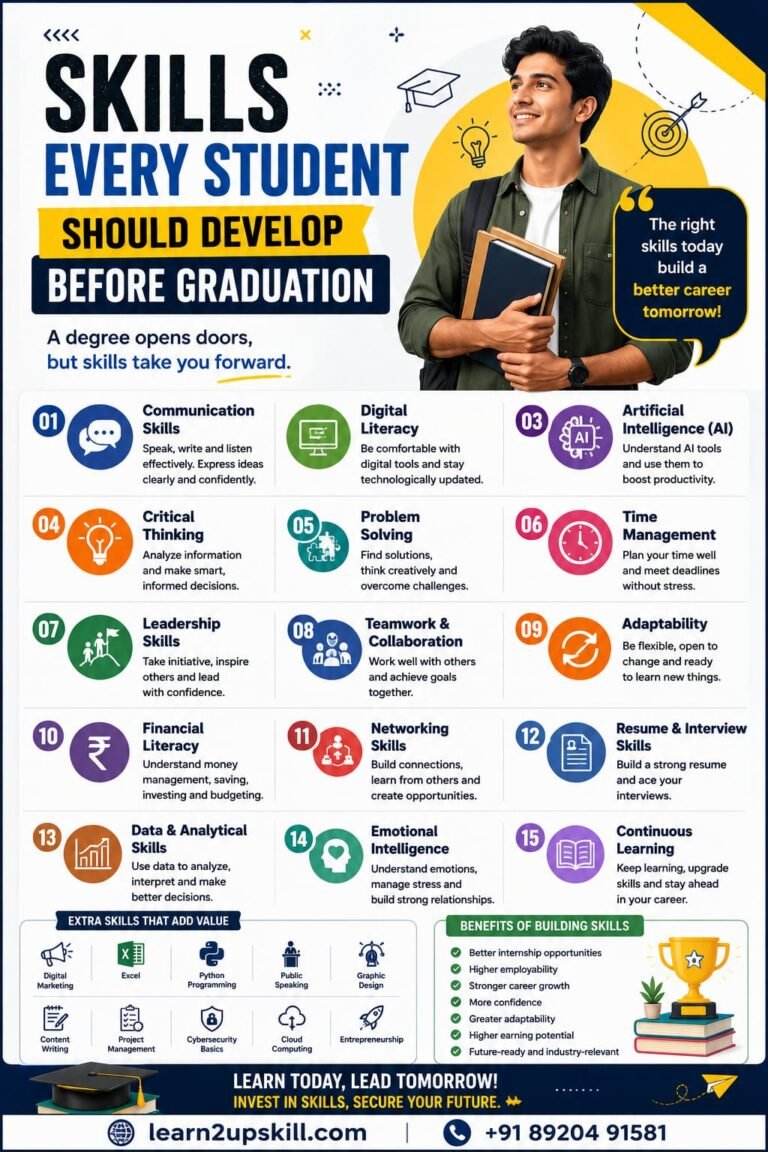
Skills Every Student Should Develop Before Graduation Published by: Learn2Upskill Website: www.learn2upskill.com Contact: +91 89204 91581 Introduction Graduating from college...
-
-
July 23, 2026
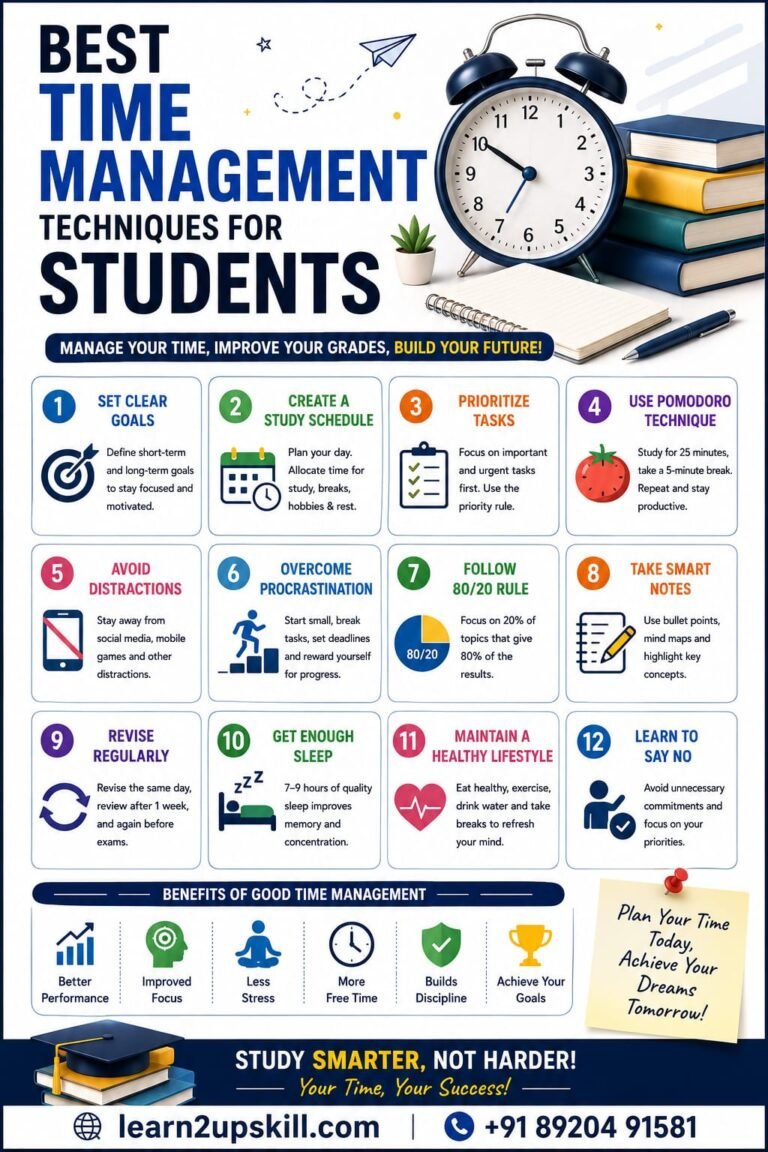
Best Time Management Techniques for Students: Study Smarter, Stress Less Published by: Learn2Upskill Website: www.learn2upskill.com Contact: +91 89204 91581 Introduction...
-
-
July 21, 2026
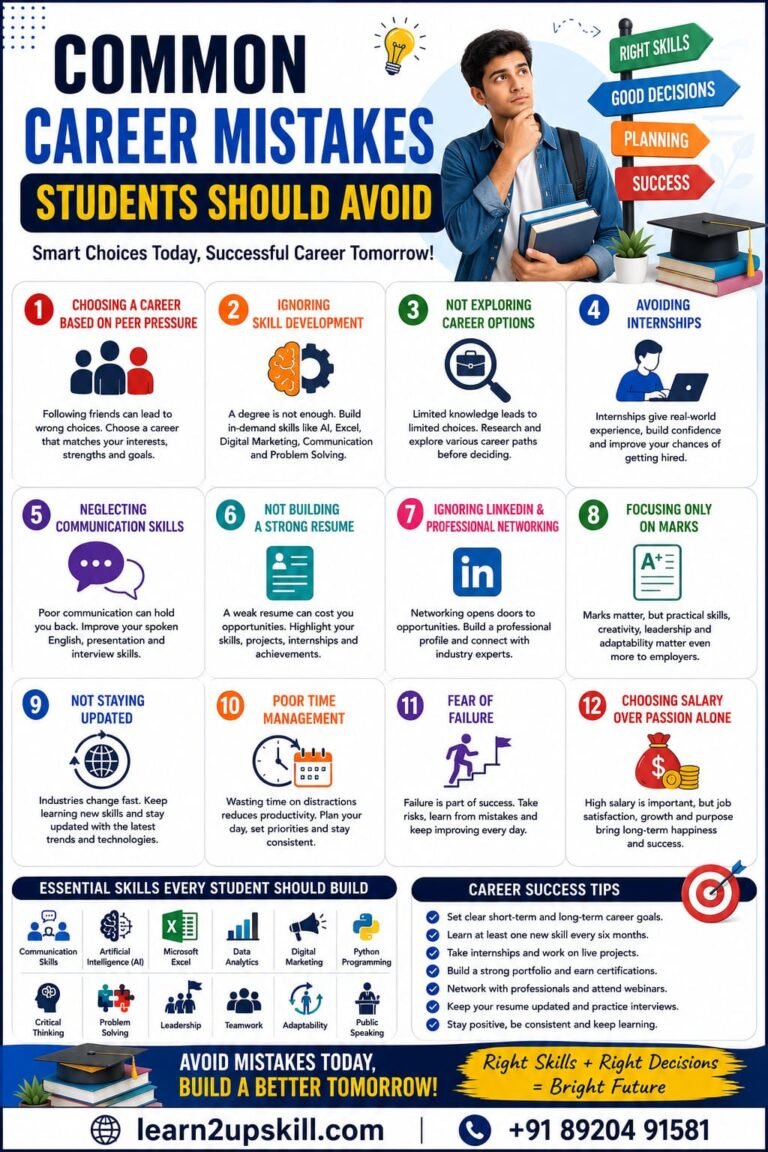
Common Career Mistakes Students Should Avoid: A Complete Guide to Building a Successful Future Published by: Learn2Upskill Website: www.learn2upskill.com Contact:...
-
-
July 19, 2026