

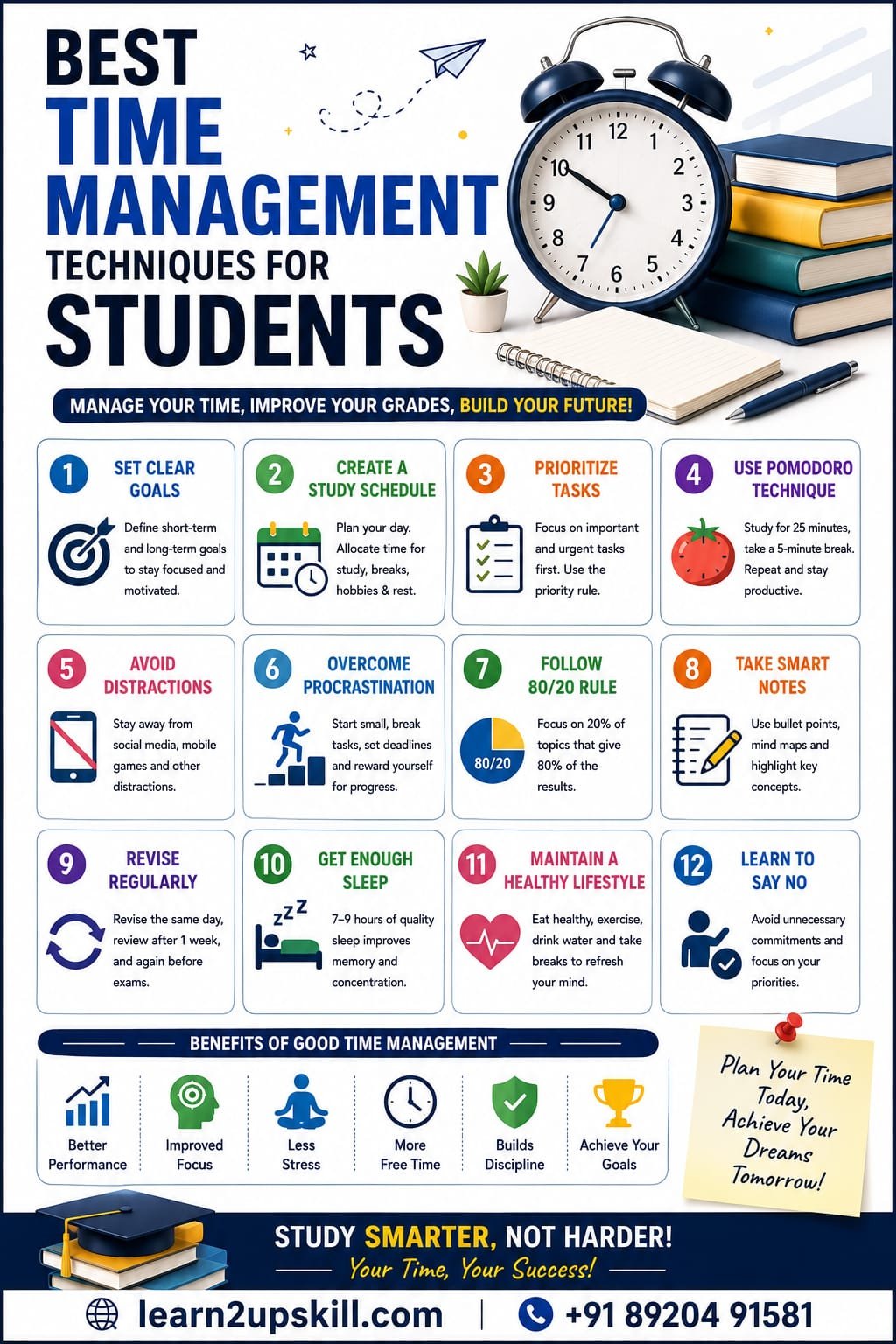
Best Time Management Techniques for Students: Study Smarter, Stress Less
Best Time Management Techniques for Students: Study Smarter, Stress Less
Published by: Learn2Upskill
Website: www.learn2upskill.com
Contact: +91 89204 91581
Introduction
Time is one of the most valuable resources for every student. Whether you’re preparing for board exams, college entrance tests, competitive exams, or balancing academics with extracurricular activities, managing your time effectively can make a huge difference.
Many students struggle not because they lack intelligence, but because they don’t have a proper plan for using their time. By developing good time management habits, you can improve your grades, reduce stress, and still have time for hobbies, family, and relaxation.
In this blog, we’ll explore the best time management techniques every student should use to become more productive and successful.
Why Time Management Is Important
Effective time management helps students:
– Complete assignments on time
– Reduce exam stress
– Improve concentration
– Increase productivity
– Maintain a healthy study-life balance
– Build self-discipline and confidence
Students who manage their time well are more likely to achieve their academic and career goals.
—
- Set Clear Goals
Start by defining what you want to achieve.
Short-Term Goals
– Finish today’s homework
– Revise one chapter
– Practice 20 math questions
Long-Term Goals
– Score above 90%
– Crack competitive exams
– Improve English communication
– Learn a new skill
Clear goals give your studies direction and purpose.
—
- Create a Daily Study Schedule
A timetable helps you organize your day effectively.
Remember to keep your schedule realistic and flexible.
—
- Prioritize Important Tasks
Not every task has the same importance.
Focus first on:
– Upcoming exams
– Assignments with deadlines
– Difficult subjects
– Project work
Complete high-priority tasks before spending time on less important activities.
—
- Use the Pomodoro Technique
The Pomodoro Technique is a simple and effective study method.
– Study for 25 minutes
– Take a 5-minute break
– Repeat four times
– Take a longer 20–30 minute break
This technique helps maintain focus and prevents mental fatigue.
—
- Avoid Procrastination
Procrastination is one of the biggest obstacles to success.
Common reasons include:
– Fear of failure
– Lack of motivation
– Mobile phone distractions
– Poor planning
How to overcome it:
– Start with small tasks.
– Break large projects into smaller steps.
– Set deadlines for yourself.
– Reward yourself after completing tasks.
—
- Eliminate Distractions
Distractions reduce productivity and waste valuable study time.
Common distractions:
– Social media
– Mobile games
– TV
– Notifications
– Unnecessary internet browsing
- Follow the 80/20 Rule
The Pareto Principle suggests that 20% of your efforts often produce 80% of your results.
Identify the topics that carry the most marks or require the most attention, and focus on mastering them first.
—
- Take Smart Notes
Well-organized notes make revision easier.
Use:
– Bullet points
– Mind maps
– Flowcharts
– Highlight key formulas and definitions
– Color coding for important concepts
Good notes save time during exam preparation.
—
- Revise Regularly
Revision helps move information into long-term memory.
A simple revision plan:
– Revise the same day.
– Review after one week.
– Revise again before exams.
Frequent revision improves retention and confidence.
—
- Get Enough Sleep
Sleeping less does not mean studying more effectively.
Aim for 7–9 hours of quality sleep each night. Adequate rest improves memory, concentration, and learning ability.
—
- Maintain a Healthy Lifestyle
Your brain performs better when your body is healthy.
– Eat nutritious meals.
– Drink plenty of water.
– Exercise regularly.
– Take short breaks while studying.
A healthy routine supports better academic performance.
—
- Learn to Say No
Avoid unnecessary commitments that take time away from your priorities.
Politely decline activities that interfere with your study schedule and focus on what matters most.
—
Useful Time Management Apps
Students can use these apps to stay organized:
– Google Calendar
– Microsoft To Do
– Notion
– Todoist
– Forest
– Trello
These tools help you manage tasks, deadlines, and study plans effectively.
—
Common Time Management Mistakes
Avoid these habits:
– Studying without a plan
– Multitasking
– Leaving work until the last minute
– Ignoring breaks
– Spending excessive time on social media
– Not reviewing completed work
Recognizing these mistakes is the first step toward improving your productivity.
—
Benefits of Good Time Management
Students who manage their time effectively often experience:
– Better academic performance
– Reduced stress
– Improved focus
– Increased confidence
– More free time
– Stronger discipline
– Better career preparation
—
Final Tips for Success
– Plan your day the night before.
– Start with the hardest subject.
– Review your progress weekly.
– Keep learning consistently.
– Stay positive and motivated.
– Celebrate small achievements.
—
Conclusion
Time management is a skill that every student can develop. By planning your day, setting clear goals, avoiding distractions, and staying consistent, you can improve your academic performance while maintaining a healthy balance in life.
Remember, success isn’t about studying for the longest hours—it’s about making the best use of the time you have. Start applying these techniques today, and you’ll be one step closer to achieving your educational and career goals.
Learn with Learn2Upskill
At Learn2Upskill, we help students build practical, career-ready skills through expert guidance, online courses, and professional development resources.
Website: www.learn2upskill.com
Contact: +91 89204 91581
Learn smarter. Manage your time better. Build a brighter future with Learn2Upskill!
You May Also Like
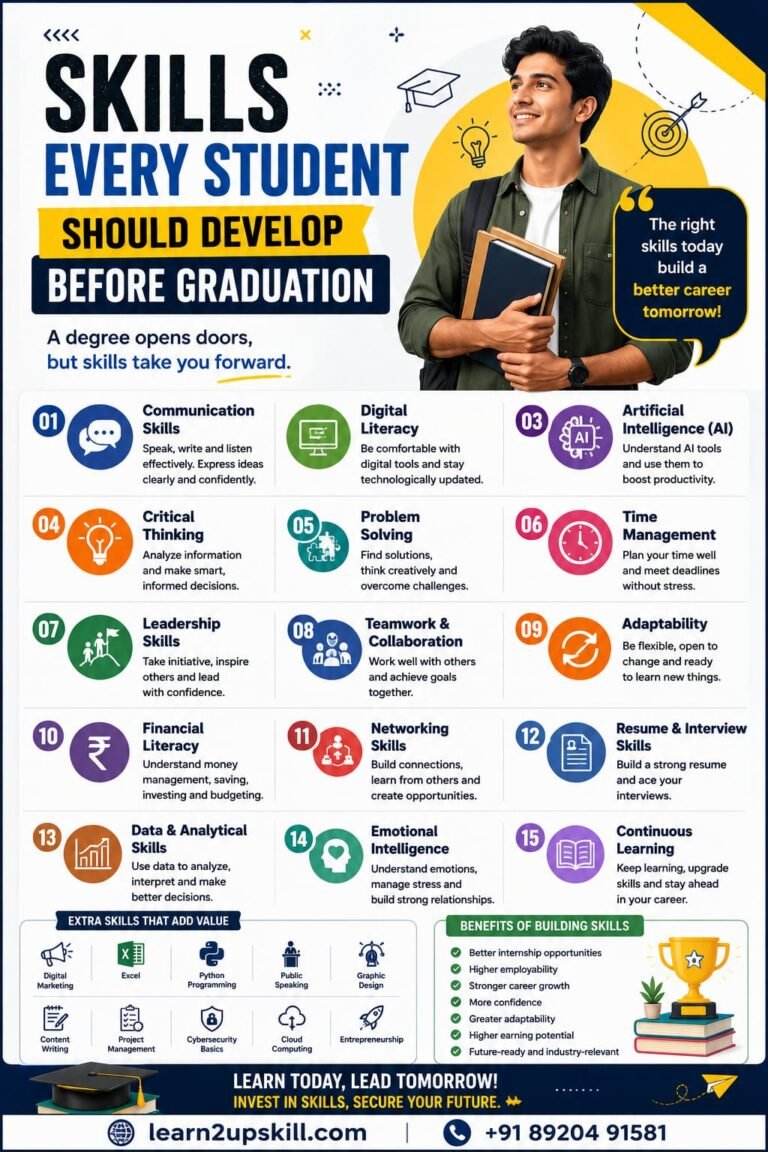
Skills Every Student Should Develop Before Graduation Published by: Learn2Upskill Website: www.learn2upskill.com Contact: +91 89204 91581 Introduction Graduating from college...
-
-
July 23, 2026
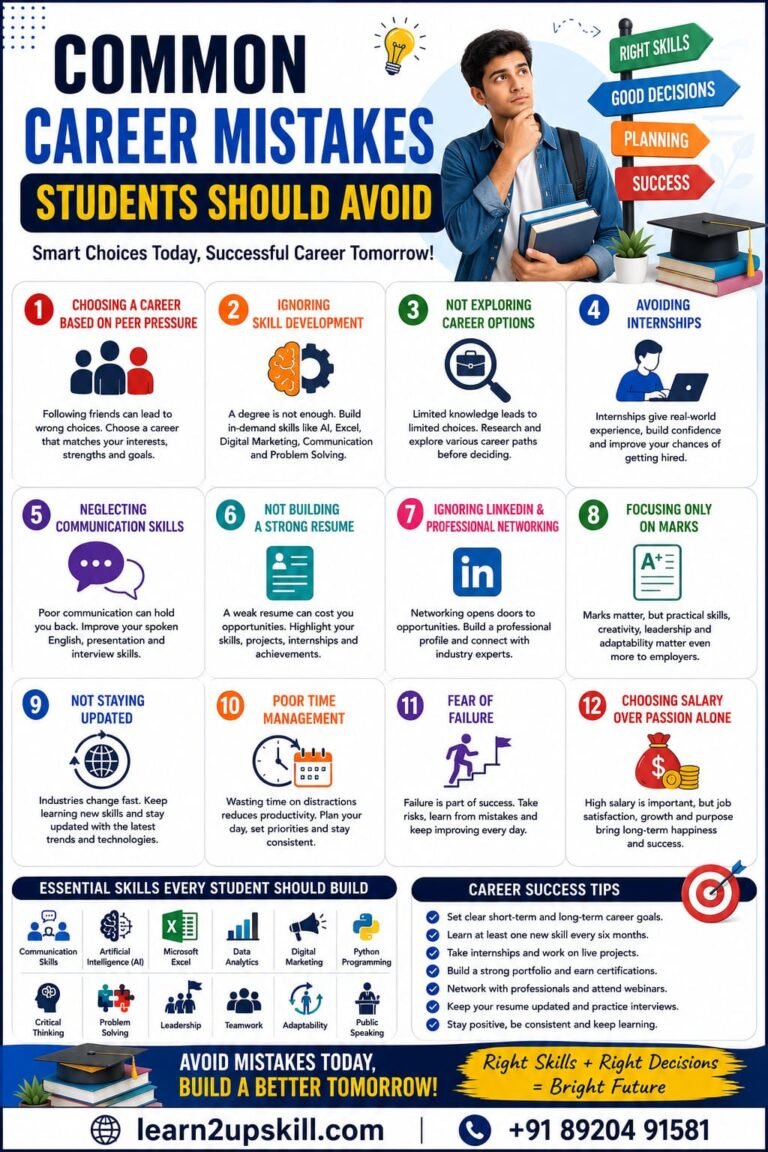
Common Career Mistakes Students Should Avoid: A Complete Guide to Building a Successful Future Published by: Learn2Upskill Website: www.learn2upskill.com Contact:...
-
-
July 19, 2026

Will AI Replace Jobs? AI is unlikely to replace every job completely. Instead, it is changing how work gets done....
-
-
July 15, 2026