
Career Planning Guide for Students
Career Planning Guide for Students
Learn how to plan your career with this complete guide for students. Discover how to identify your interests, choose the right career, build in-demand skills, and prepare for future job opportunities.
Focus Keyword: Career Planning Guide for Students
—
Career Planning Guide for Students
Choosing the right career is one of the most important decisions a student will make. With thousands of career options available today and rapid changes in technology, many students feel confused about where to begin.
The good news is that career planning doesn’t require you to have all the answers immediately. Instead, it’s about understanding yourself, exploring opportunities, developing the right skills, and making informed decisions over time.
This comprehensive guide will help students create a clear career roadmap and prepare for a successful future.
—
What Is Career Planning?
Career planning is the process of identifying your interests, strengths, values, and goals, then selecting a career path that aligns with them.
It involves:
– Self-assessment
– Career exploration
– Skill development
– Goal setting
– Continuous learning
– Practical experience
Good career planning helps you make confident decisions instead of choosing a career based only on trends or pressure.
—
Why Is Career Planning Important?
Proper career planning helps students:
– Understand their strengths
– Make informed career choices
– Reduce confusion and stress
– Develop job-ready skills
– Improve employability
– Build confidence
– Achieve long-term career goals
—
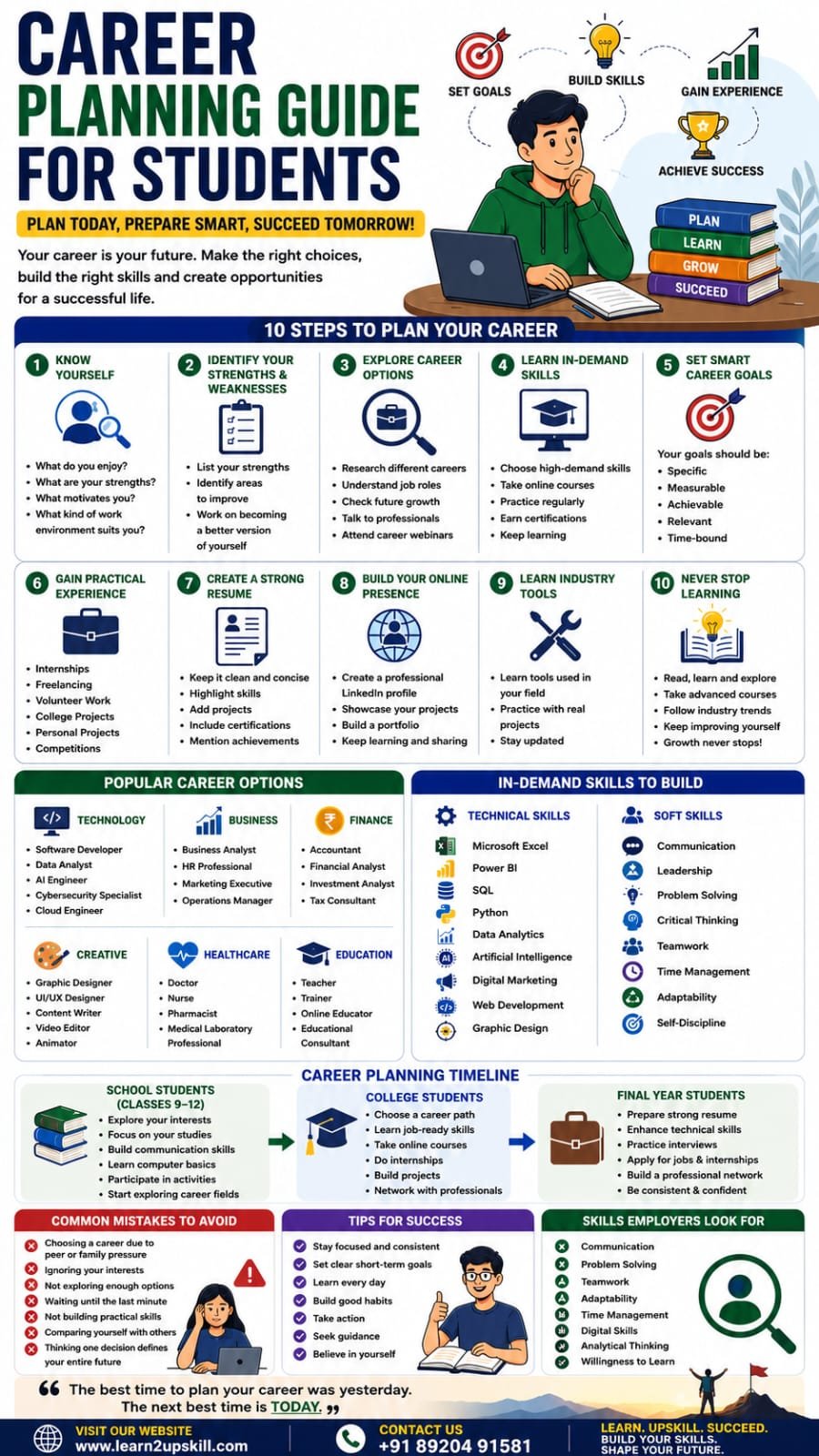
Step 1: Know Yourself
Before choosing any profession, understand who you are.
Ask yourself:
– What subjects do I enjoy?
– What activities excite me?
– What are my strengths?
– What kind of work environment suits me?
– What values matter most to me?
Knowing yourself makes career decisions easier.
—
Step 2: Identify Your Strengths and Weaknesses
Create a simple list.
Strengths
Examples:
– Communication
– Problem Solving
– Leadership
– Creativity
– Mathematics
– Analytical Thinking
– Teamwork
Areas to Improve
Examples:
– Public Speaking
– Time Management
– Technical Skills
– Confidence
– Organization
Improving your weaker areas can significantly increase your career opportunities.
—
Step 3: Explore Career Options
Don’t limit yourself to careers you hear about most often.
Research different industries.
Technology
Business
Finance
Creative Careers
Healthcare
Education
—
Step 4: Learn In-Demand Skills
Today’s employers value practical skills in addition to academic qualifications.
Some of the most sought-after skills include:
Technical Skills
Soft Skills
These skills are valuable across many industries.
—
Step 5: Set SMART Career Goals
A good goal is:
– Specific
– Measurable
– Achievable
– Relevant
– Time-bound
—
Step 6: Build Practical Experience
Experience helps turn knowledge into skills.
Ways to gain experience:
– Internships
– Freelancing
– Volunteer work
– College projects
– Online competitions
– Personal projects
– Hackathons
Employers appreciate candidates who can demonstrate practical work.
—
Step 7: Create a Strong Resume
A student resume should include:
– Education
– Skills
– Certifications
– Projects
– Internships
– Achievements
– Volunteer Experience
Keep it concise, accurate, and tailored to the role you’re applying for.
—
Step 8: Build Your Online Presence
Recruiters often review candidates online.
—
Step 9: Learn Industry Tools
Different careers require different tools.
Examples:
Data Analytics
Marketing
Design
Project Management
Learning industry-standard tools gives you a competitive advantage.
—
Step 10: Never Stop Learning
Technology evolves rapidly.
Stay updated by:
– Taking online courses
– Reading industry blogs
– Watching educational videos
– Practicing regularly
– Attending webinars
– Networking with professionals
Continuous learning is essential for long-term career growth.
—
Common Career Planning Mistakes
Avoid these common mistakes:
– Choosing a career because of peer pressure.
– Ignoring your interests and strengths.
– Waiting until graduation to build skills.
– Not gaining practical experience.
– Comparing yourself with others.
– Believing one decision determines your entire future.
—
Skills Employers Look For
Across industries, employers consistently value:
– Communication
– Problem Solving
– Teamwork
– Adaptability
– Critical Thinking
– Time Management
– Digital Skills
– Microsoft Excel
– Analytical Thinking
– Willingness to Learn
Developing these skills can significantly improve your employability.
—
Final Thoughts
Career planning is not about having your entire future figured out today—it’s about taking consistent steps toward a meaningful and successful career. By understanding yourself, exploring opportunities, building practical skills, and gaining real-world experience, you can create a strong foundation for long-term success.
Start early, stay curious, and continue learning. Every course you complete, every project you build, and every new skill you develop brings you closer to your career goals.
At Learn2Upskill, we help students become job-ready with practical training in Microsoft Excel, Data Analytics, Power BI, Python, AI, Digital Marketing, and other high-demand professional skills.
Why Learn with Learn2Upskill?
– Industry-focused training
– Hands-on projects
– Practical learning approach
– Career-oriented curriculum
– Expert guidance
– Skills aligned with today’s job market
Visit: www.learn2upskill.com
Contact Us: +91 89204 91581
Learn Today. Build Skills. Shape Your Future.
You May Also Like
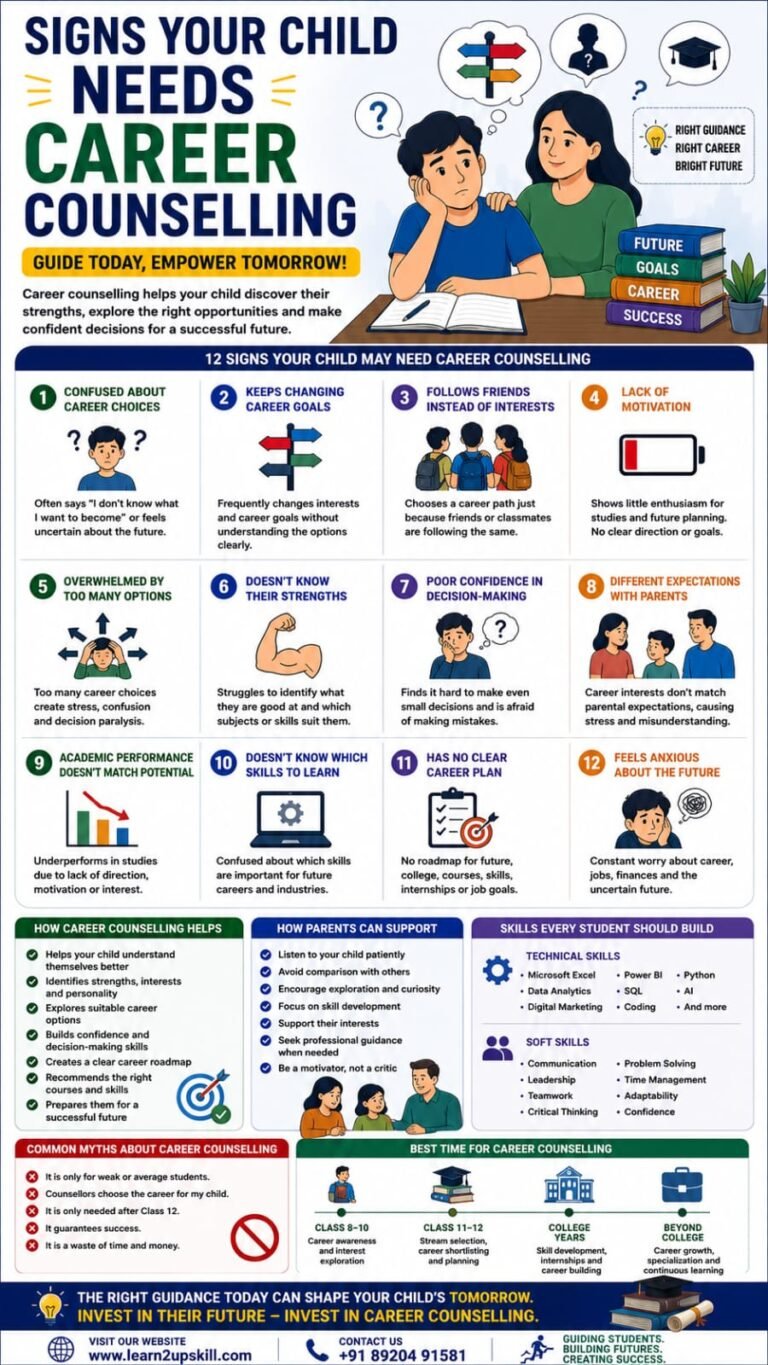
Signs Your Child Needs Career Counselling Learn the common signs that your child may need career counselling. Discover how career...
-
-
July 27, 2026
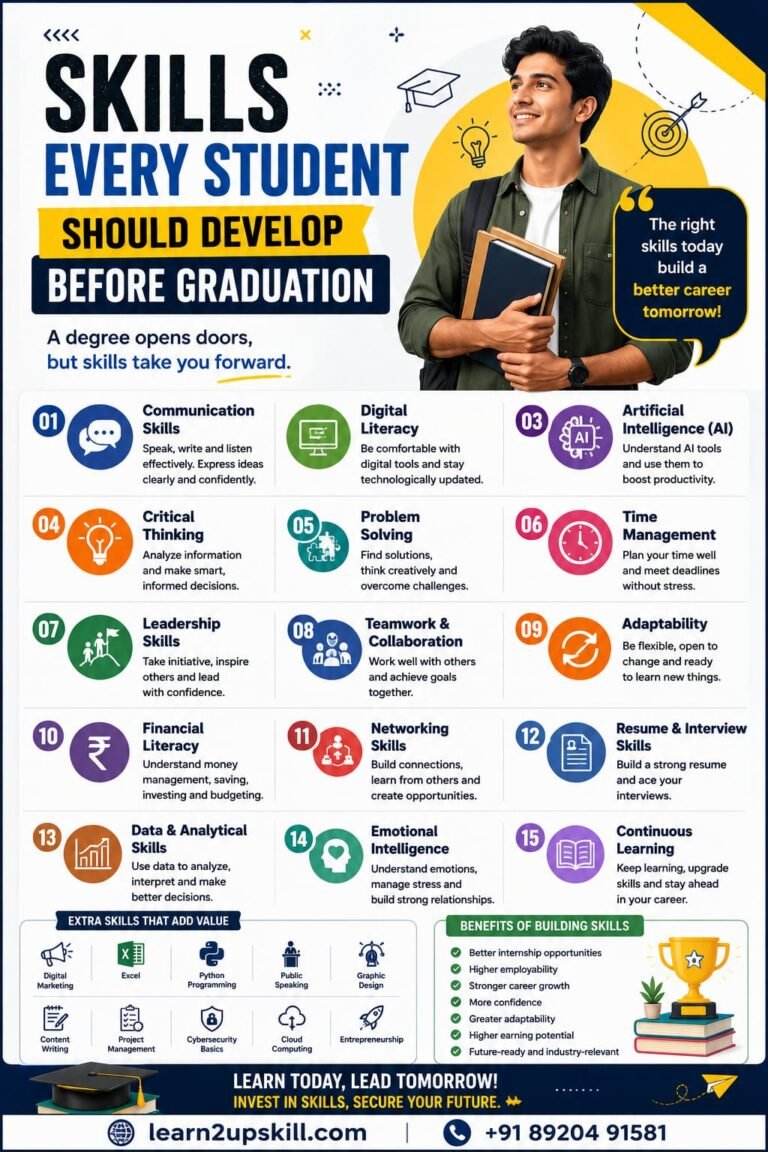
Skills Every Student Should Develop Before Graduation Published by: Learn2Upskill Website: www.learn2upskill.com Contact: +91 89204 91581 Introduction Graduating from college...
-
-
July 23, 2026
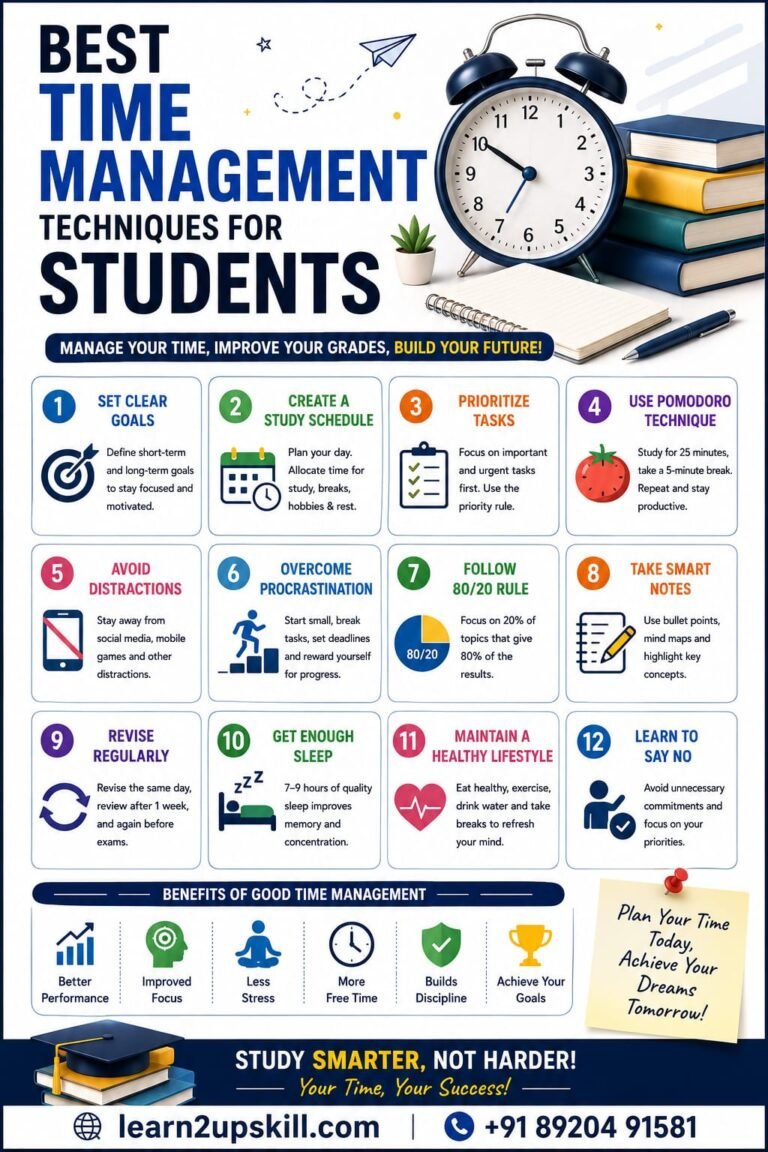
Best Time Management Techniques for Students: Study Smarter, Stress Less Published by: Learn2Upskill Website: www.learn2upskill.com Contact: +91 89204 91581 Introduction...
-
-
July 21, 2026