

SEO for Beginners: Complete Guide
SEO for Beginners: Complete Guide
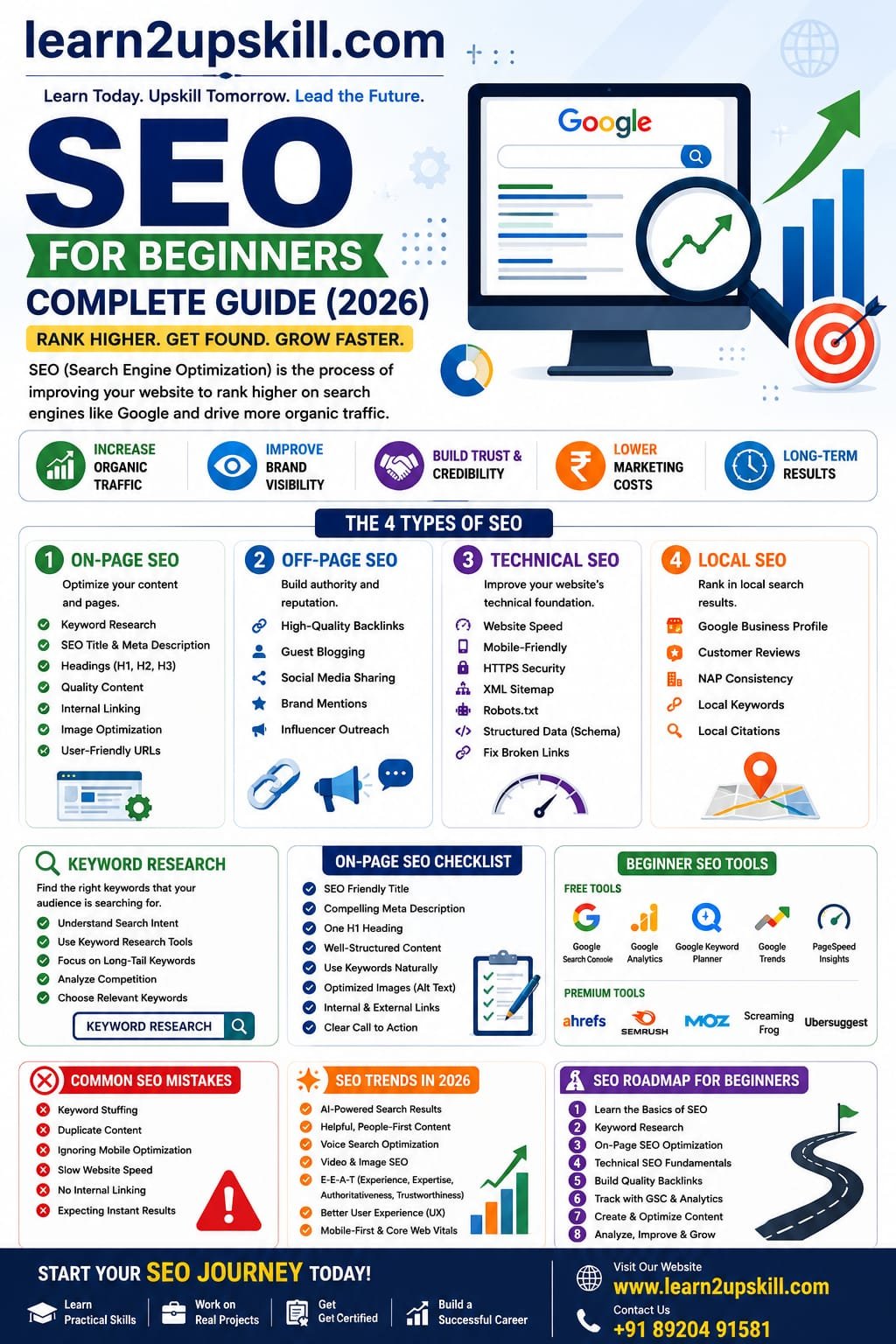
Learn SEO from scratch with this beginner-friendly guide. Discover on-page SEO, off-page SEO, technical SEO, keyword research, and the latest SEO best practices for 2026.
If you’ve ever wondered “How do websites appear on the first page of Google?”, the answer is Search Engine Optimization (SEO).
SEO is one of the most valuable digital marketing skills you can learn. Whether you’re a student, blogger, business owner, freelancer, or digital marketer, understanding SEO can help you attract more visitors, generate leads, and grow your online presence—without relying solely on paid advertising.
In this complete beginner’s guide, you’ll learn what SEO is, how search engines work, the different types of SEO, and the practical steps you can take to improve your website’s visibility in 2026.
What Is SEO?
Search Engine Optimization (SEO) is the process of improving a website so that it appears higher in search engine results for relevant searches.
For example, if someone searches for:
– Best Digital Marketing Course
– AI Tools for Students
– Learn Excel Online
SEO helps your website become one of those pages.
Why Is SEO Important?
Every day, billions of searches are made online. Most users click on one of the first few results, so ranking well can make a significant difference.
Benefits of SEO include:
– Increased organic (free) website traffic
– Better brand visibility
– More leads and sales
– Higher trust and credibility
– Long-term marketing results
– Lower customer acquisition costs compared to many paid campaigns
How Do Search Engines Work?
Search engines such as Google generally follow three main steps:
- Crawling
Search engine bots discover webpages by following links across the internet.
- Indexing
The content of those pages is stored and organized in Google’s index.
- Ranking
When someone searches, Google evaluates many factors to decide which pages are most useful and should appear first.
Your SEO efforts help search engines understand why your page deserves to rank.
Types of SEO
SEO can be divided into four major areas.
- On-Page SEO
On-page SEO focuses on optimizing the content and structure of individual pages.
Key elements include:
– Keyword research
– SEO-friendly titles
– Meta descriptions
– Headings (H1, H2, H3)
– Internal linking
– Image optimization
– User-friendly URLs
– High-quality content
- Off-Page SEO
Off-page SEO helps build your website’s authority.
Common techniques include:
– High-quality backlinks
– Guest blogging
– Brand mentions
– Social media sharing
– Digital PR
Quality matters much more than quantity when it comes to backlinks.
- Technical SEO
Technical SEO ensures your website is easy for search engines to crawl and provides a good user experience.
Important areas include:
– Fast loading speed
– Mobile-friendly design
– Secure HTTPS connection
– XML sitemap
– Robots.txt
– Structured data (Schema)
– Fixing broken links
– Clean site architecture
- Local SEO
Local SEO helps businesses appear in location-based searches.
Content Is the Foundation of SEO
Creating helpful, original content is one of the most effective ways to improve your rankings.
Good content should:
– Solve a real problem
– Be easy to read
– Include examples
– Use headings and bullet points
– Stay up to date
– Demonstrate expertise and trustworthiness
Write for people first, then optimize for search engines.
Essential On-Page SEO Checklist
Before publishing a page, check that you have:
– An engaging SEO title
– A compelling meta description
– One H1 heading
– Well-organized H2 and H3 headings
– Relevant keywords used naturally
– Optimized images with descriptive alt text
– Internal links to related pages
– External links to reliable sources when appropriate
– A clear call to action
Beginner-Friendly SEO Tools
These tools can help you improve your website:
Free Tools
– Google Search Console
– Google Analytics
– Google Keyword Planner
– Google Trends
– PageSpeed Insights
Paid Tools
– Ahrefs
– SEMrush
– Moz
– Screaming Frog SEO Spider
– Surfer SEO
Start with the free tools and upgrade only when your needs grow.
Common SEO Mistakes to Avoid
Many beginners make these mistakes:
– Keyword stuffing
– Copying content from other websites
– Ignoring mobile optimization
– Publishing thin or low-value content
– Neglecting technical SEO
– Forgetting internal linking
– Using duplicate title tags and meta descriptions
– Expecting instant results
SEO is a long-term strategy that rewards consistency.
SEO Trends in 2026
SEO continues to evolve. Some important trends include:
– AI-assisted content creation with strong human editing
– Greater focus on user experience
– Helpful, experience-based content
– Voice search optimization
– Video SEO
– Image search optimization
– Structured data implementation
– Fast, mobile-first websites
Successful websites combine useful content with excellent technical performance.
Step-by-Step SEO Learning Roadmap
If you’re just getting started, follow this path:
Week 1: Learn SEO basics and search intent.
Week 2: Understand keyword research.
Week 3: Practice on-page SEO.
Week 4: Learn technical SEO fundamentals.
Week 5: Build backlinks ethically.
Week 6: Use Google Search Console and Analytics.
Week 7: Create SEO-optimized blog posts.
Week 8: Analyze results and improve existing content.
Keep practicing by optimizing your own website or blog.
Frequently Asked Questions
Is SEO difficult to learn?
No. The basics are beginner-friendly, but mastering SEO requires continuous learning and practical experience.
How long does SEO take to show results?
SEO is a long-term investment. Depending on your website, competition, and content quality, noticeable improvements can take several weeks to several months.
Can I learn SEO for free?
Yes. There are many free resources, and you can gain valuable experience by working on your own website.
Does SEO require coding?
Not for most beginners. While technical SEO benefits from some technical knowledge, you can achieve strong results without being a programmer.
Conclusion
SEO remains one of the most powerful ways to grow a website organically. Whether you’re building a personal blog, promoting a business, or starting a career in digital marketing, understanding SEO gives you a valuable advantage.
The key is to focus on creating helpful content, optimizing your website, and continuously improving based on user needs and search performance.
Remember, SEO is not about trying to “beat” search engines—it’s about making your website the best answer for your audience.
At Learn2UpSkill, we’re committed to helping learners build practical, future-ready digital skills. Explore our resources on SEO, AI, digital marketing, analytics, and more to accelerate your career.
Start optimizing today, stay consistent, and let your content work for you.
You May Also Like
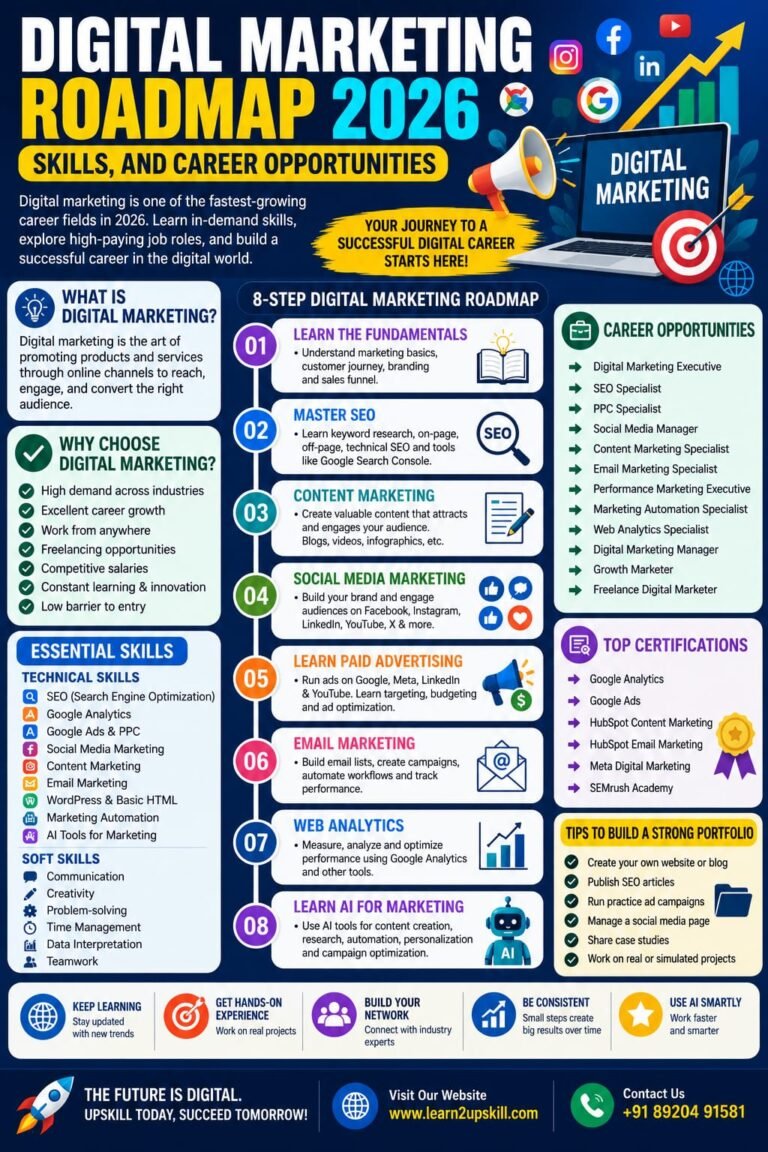
Digital Marketing: Skills, Salary & Career Opportunities Discover the complete Digital Marketing Roadmap for 2026. Learn essential skills, salary expectations,...
-
-
July 14, 2026

In today’s fast-paced and technology-driven world, digital skills have become the cornerstone of personal and professional success. Whether you’re aiming...
-
-
October 26, 2024