

Digital Marketing: Skills, Salary, and Career Opportunities
Digital Marketing: Skills, Salary & Career Opportunities
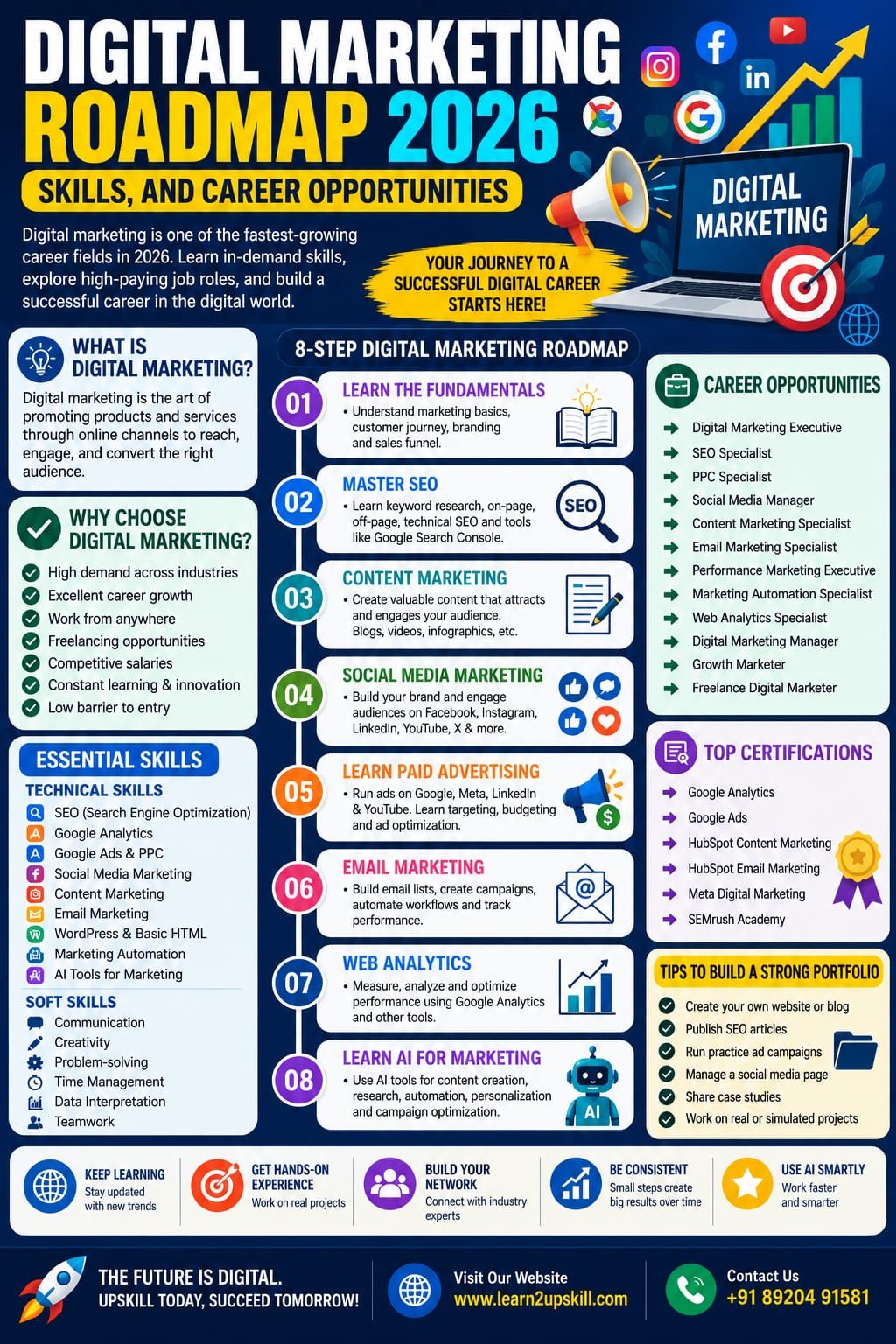
Discover the complete Digital Marketing Roadmap for 2026. Learn essential skills, salary expectations, career opportunities, certifications, and a step-by-step plan to become a successful digital marketer.
Digital marketing is one of the fastest-growing and most rewarding career fields in 2026. As businesses continue to expand their online presence, the demand for skilled digital marketers is increasing across industries.
Whether you’re a student, a working professional, or someone planning a career switch, this roadmap will help you understand what digital marketing is, the skills you need, salary expectations, and the best career opportunities available.
What Is Digital Marketing?
Digital marketing is the practice of promoting products and services through online channels such as search engines, social media platforms, email, websites, and mobile applications.
Unlike traditional marketing, digital marketing allows businesses to measure campaign performance, reach targeted audiences, and optimize strategies based on data.
Why Choose Digital Marketing in 2026?
Digital marketing continues to grow because businesses of every size rely on online channels to reach customers.
Benefits of Choosing Digital Marketing
– High demand across industries
– Excellent career growth
– Opportunity to work remotely
– Freelancing and consulting opportunities
– Competitive salaries
– Constant learning and innovation
– Low barrier to entry compared to many technical careers
Step-by-Step Digital Marketing Roadmap
Step 1: Learn the Fundamentals
Start by understanding the basics of:
– Marketing principles
– Customer journey
– Sales funnel
– Branding
– Content marketing
A strong foundation will help you understand how different digital marketing channels work together.
Step 2: Master SEO (Search Engine Optimization)
SEO helps websites rank higher on search engines and attract organic traffic.
Learn:
– Keyword research
– On-page SEO
– Technical SEO
– Off-page SEO
– Link building
– Local SEO
– SEO tools
Popular tools include Google Search Console, Google Analytics, and keyword research platforms.
Step 3: Learn Content Marketing
Content is one of the most important parts of digital marketing.
Focus on creating:
– Blog articles
– Landing pages
– Social media content
– Email newsletters
– Case studies
– Video scripts
Develop strong writing skills and learn how to create content that solves user problems.
Step 4: Social Media Marketing
Every digital marketer should understand how major social platforms work.
Learn to create strategies for:
– YouTube
– X
Key skills include content planning, audience engagement, analytics, and paid promotions.
Step 5: Learn Paid Advertising
Paid advertising helps businesses reach potential customers quickly.
Important platforms include:
– Google Ads
– Meta Ads
– LinkedIn Ads
– YouTube Ads
Understand campaign setup, audience targeting, budgeting, and performance tracking.
Step 6: Email Marketing
Email remains one of the highest-return digital marketing channels.
Learn:
– Email campaign creation
– Automation
– Segmentation
– A/B testing
– Performance analysis
Step 7: Web Analytics
Successful marketers make decisions based on data.
Learn to measure:
– Website traffic
– Conversion rates
– Bounce rate
– User behavior
– Campaign performance
– Return on investment (ROI)
Step 8: Learn AI for Digital Marketing
AI is transforming digital marketing.
Learn how AI can help with:
– Content creation
– SEO research
– Customer support
– Marketing automation
– Data analysis
– Campaign optimization
– Personalization
Understanding AI tools can significantly improve productivity.
Essential Skills Every Digital Marketer Needs
Technical Skills
– SEO
– Google Analytics
– Google Ads
– Social Media Marketing
– Content Writing
– Email Marketing
– Basic HTML
– WordPress
– AI Tools
– Marketing Automation
Soft Skills
– Communication
– Creativity
– Problem-solving
– Time management
– Critical thinking
– Data interpretation
Digital marketing offers a wide range of career paths.
Popular job roles include:
– Digital Marketing Executive
– SEO Specialist
– PPC Specialist
– Social Media Manager
– Content Marketing Specialist
– Email Marketing Specialist
– Performance Marketing Executive
– Marketing Automation Specialist
– Web Analytics Specialist
– Digital Marketing Manager
– Growth Marketer
– Freelance Digital Marketer
Tips to Build a Strong Portfolio
Recruiters value practical work.
Build your portfolio by:
– Creating your own website or blog
– Publishing SEO articles
– Running practice ad campaigns
– Managing a social media page
– Sharing case studies
– Completing real or simulated projects
A portfolio often has a greater impact than certificates alone.
Frequently Asked Questions
Is digital marketing a good career in 2026?
Yes. It remains one of the fastest-growing career options with opportunities in almost every industry.
Do I need coding to become a digital marketer?
No. Basic technical knowledge is helpful, but advanced coding is not required for most roles.
Can freshers get a digital marketing job?
Yes. With practical skills, a portfolio, and relevant certifications, freshers can find entry-level opportunities.
How long does it take to learn digital marketing?
Most beginners can learn the fundamentals in 3–6 months with consistent practice. Becoming highly skilled requires continuous learning and hands-on experience.
Conclusion
Digital marketing is more than just a career—it’s a field that rewards curiosity, creativity, and continuous learning. As technology evolves, marketers who combine analytical thinking, practical skills, and AI knowledge will be in high demand.
If you’re starting your journey in 2026, focus on learning one skill at a time, build real projects, stay updated with industry trends, and keep improving your portfolio.
Ready to become a digital marketing professional? Learn new skills, explore practical tutorials, and accelerate your career with Learn2UpSkill.
You May Also Like
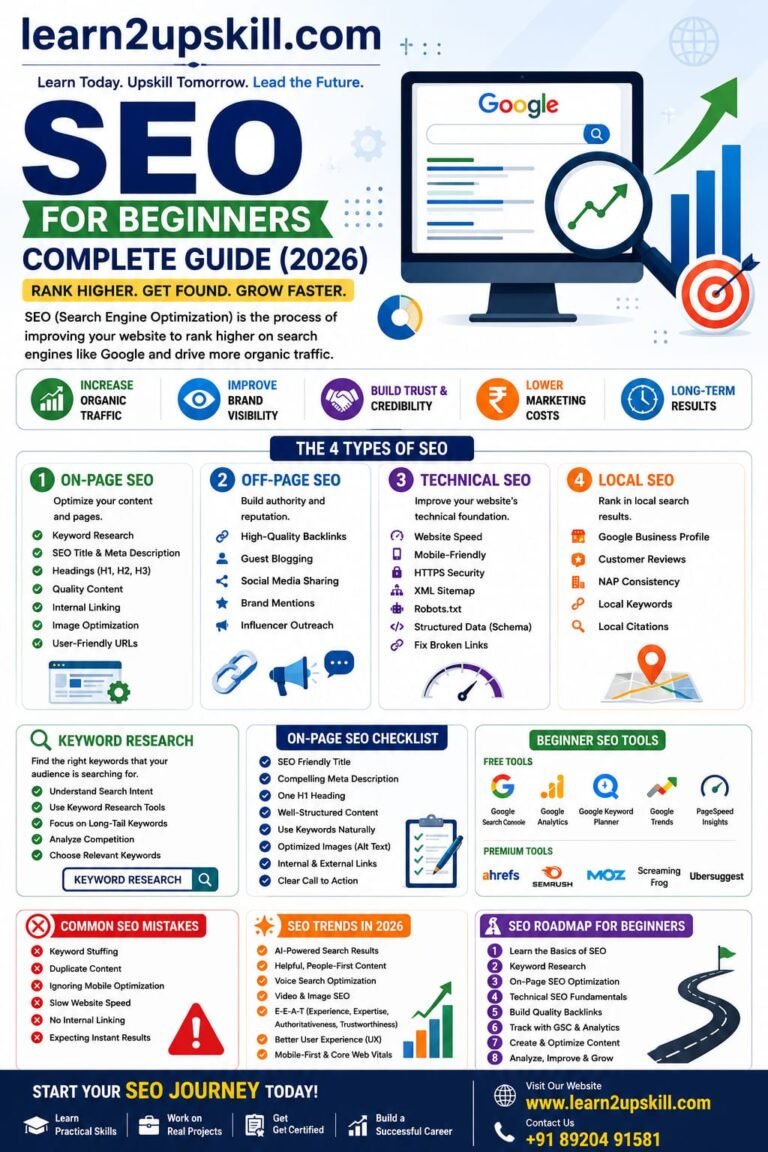
SEO for Beginners: Complete Guide Learn SEO from scratch with this beginner-friendly guide. Discover on-page SEO, off-page SEO, technical SEO,...
-
-
July 15, 2026
In today’s fast-paced and technology-driven world, digital skills have become the cornerstone of personal and professional success. Whether you’re aiming...
-
-
October 26, 2024