

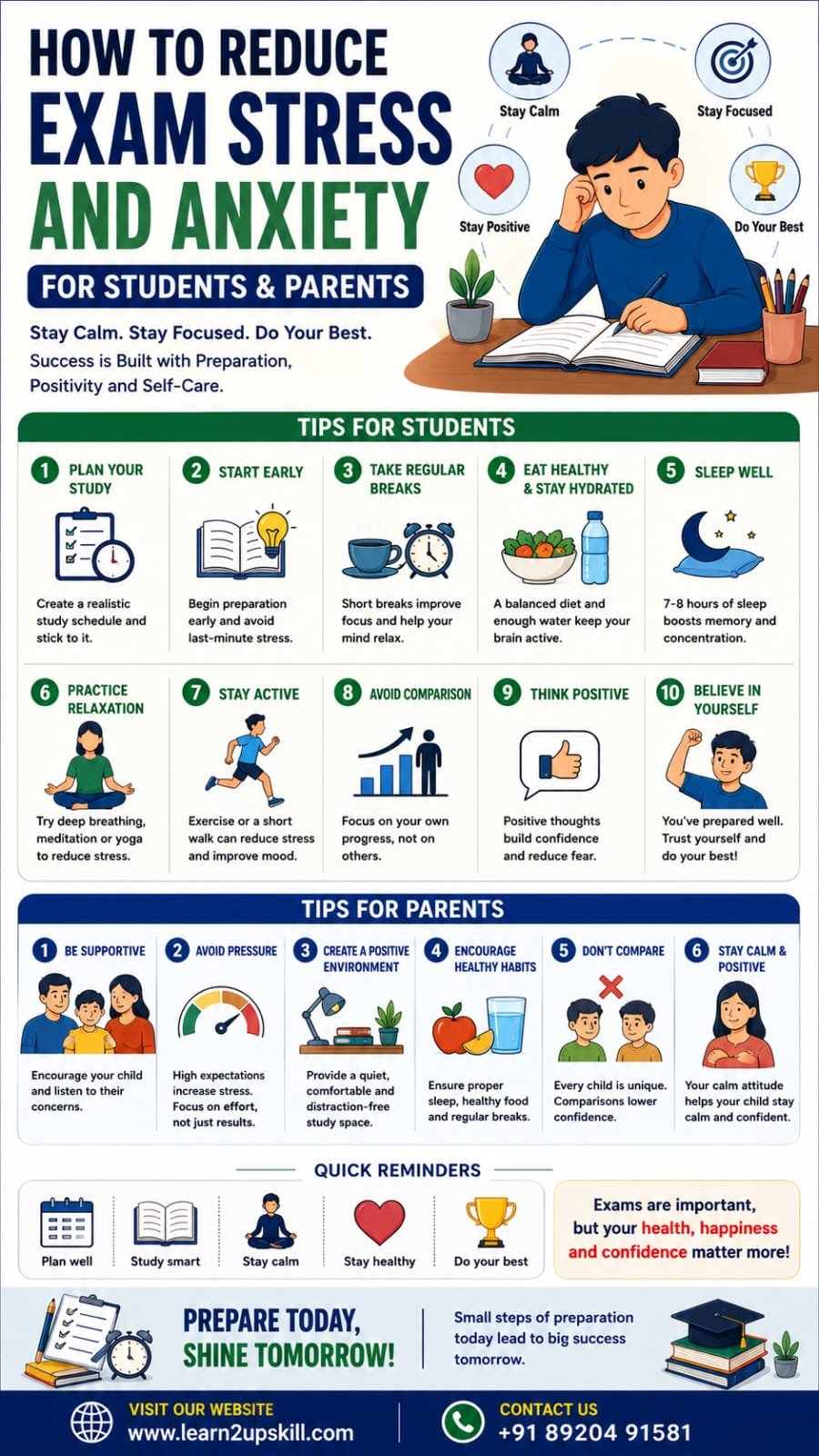
How to Reduce Exam Stress and Anxiety
How to Reduce Exam Stress and Anxiety
Meta Title: How to Reduce Exam Stress and Anxiety | A Complete Guide for Students & Parents
Meta Description: Learn practical ways to reduce exam stress and anxiety. Discover proven tips for students and parents to improve focus, confidence, mental well-being, and exam performance.
Focus Keyword: How to Reduce Exam Stress and Anxiety
—
How to Reduce Exam Stress and Anxiety: A Complete Guide for Students & Parents
Examinations are an important part of every student’s academic journey. While a little nervousness before an exam is normal, excessive stress and anxiety can affect concentration, memory, confidence, and overall performance.
Parents also experience stress during exam season as they want their children to succeed. The good news is that exam stress can be managed with the right habits, emotional support, and a balanced approach to preparation.
This guide offers practical strategies for both students and parents to reduce exam anxiety, improve focus, and build confidence.
—
What Is Exam Stress?
Exam stress is the physical and emotional pressure students feel before or during examinations.
It can result from:
– Fear of failure
– High expectations
– Poor preparation
– Time pressure
– Lack of confidence
– Comparison with others
– Uncertainty about results
A manageable level of stress can improve alertness, but excessive anxiety can make studying and performing in exams more difficult.
—
Common Signs of Exam Stress
Students may experience:
Emotional Signs
– Constant worry
– Fear of failure
– Irritability
– Mood swings
– Low confidence
– Feeling overwhelmed
Physical Signs
– Headaches
– Trouble sleeping
– Fatigue
– Loss of appetite
– Rapid heartbeat
– Stomach discomfort
Academic Signs
– Difficulty concentrating
– Forgetting studied topics
– Procrastination
– Lack of motivation
– Avoiding study sessions
Recognizing these signs early allows students and parents to take supportive action.
—
Why Do Students Feel Exam Anxiety?
Some common reasons include:
– Pressure to score high marks
– Competition with classmates
– Unrealistic expectations
– Poor time management
– Last-minute preparation
– Fear of disappointing parents or teachers
– Negative self-talk
Understanding the cause is the first step toward managing it.
—
Tips for Students to Reduce Exam Stress
- Create a Realistic Study Plan
Break your syllabus into manageable sections.
Instead of studying everything in one day:
– Divide subjects into daily goals.
– Set achievable targets.
– Include revision time.
– Leave time for breaks.
Consistency is more effective than cramming.
—
- Start Preparing Early
Last-minute studying increases anxiety.
Beginning your preparation weeks in advance gives you more time to understand concepts, revise regularly, and identify areas that need improvement.
—
- Practice Active Learning
Instead of only reading textbooks:
– Solve previous years’ papers.
– Practice mock tests.
– Create summary notes.
– Teach concepts to a friend.
– Use flashcards for quick revision.
Active learning improves memory and confidence.
—
- Take Regular Breaks
Studying continuously for long hours can reduce concentration.
Try studying for focused sessions followed by short breaks to refresh your mind.
Use breaks to stretch, hydrate, or take a short walk.
—
- Get Enough Sleep
Sleep is essential for memory and concentration.
Aim for 7–9 hours of quality sleep each night, especially before an exam.
Avoid sacrificing sleep for last-minute revision whenever possible.
—
- Eat Healthy
A balanced diet supports brain function.
Choose foods such as:
– Fruits
– Vegetables
– Whole grains
– Nuts
– Dairy products
– Protein-rich meals
Drink enough water throughout the day.
Limit excessive caffeine and sugary drinks if they make you feel jittery.
—
- Avoid Comparing Yourself
Every student learns at a different pace.
Comparing marks, preparation, or study hours with others often increases unnecessary stress.
Focus on improving your own progress.
—
- Practice Relaxation Techniques
Simple relaxation methods can help calm your mind.
Examples include:
– Deep breathing
– Gentle stretching
– Mindfulness
– Short meditation sessions
– Listening to calming music during breaks
—
- Stay Physically Active
Regular physical activity helps reduce stress.
Even 20–30 minutes of walking, cycling, yoga, or another enjoyable activity can improve mood and concentration.
—
- Maintain a Positive Mindset
Replace thoughts like:
“I’ll definitely fail.”
With:
“I’ve prepared well, and I’ll do my best.”
Positive self-talk can help build confidence.
—
Tips for Parents to Support Their Child
- Avoid Excessive Pressure
Encourage your child to do their best rather than expecting perfection.
Celebrate effort as well as achievement.
—
- Listen and Communicate
Ask open-ended questions such as:
– How are you feeling about your exams?
– Is there anything you’re finding difficult?
– How can I support you?
Listening without judgment helps children feel understood.
—
- Provide a Positive Study Environment
Help create a space that is:
– Quiet
– Comfortable
– Well-lit
– Free from distractions
A good study environment improves focus.
—
- Encourage Healthy Habits
Support your child by encouraging:
– Regular meals
– Adequate sleep
– Physical activity
– Scheduled breaks
Healthy routines improve both well-being and academic performance.
—
- Avoid Comparisons
Avoid comparing your child with siblings, relatives, or classmates.
Every child has different strengths and learning styles.
—
- Recognize Their Effort
Praise consistency, discipline, and improvement—not just marks.
Positive encouragement builds confidence.
—
- Stay Calm During Exam Season
Children often notice their parents’ emotions.
A calm and supportive attitude can help reduce a student’s anxiety.
—
What to Do One Day Before the Exam
Students should:
– Revise key concepts.
– Review summary notes.
– Prepare exam materials.
– Sleep on time.
– Avoid learning completely new topics.
– Stay hydrated.
Parents should:
– Encourage relaxation.
– Avoid discussing marks or expectations.
– Ensure the child gets proper rest.
—
What to Do on Exam Day
Students
– Wake up early.
– Eat a healthy breakfast.
– Reach the exam center on time.
– Read questions carefully.
– Manage time wisely.
– Stay calm if you don’t know every answer.
Parents
– Offer encouragement.
– Avoid increasing pressure.
– Remind your child to do their best.
– Stay positive regardless of the outcome.
—
Common Mistakes to Avoid
Students
– Last-minute cramming
– Skipping meals
– Staying awake all night
– Comparing preparation with friends
– Ignoring breaks
Parents
– Unrealistic expectations
– Frequent criticism
– Comparing children
– Focusing only on marks
– Discussing negative outcomes before exams
—
Building Long-Term Confidence
Confidence grows through:
– Consistent preparation
– Regular practice
– Healthy routines
– Positive thinking
– Learning from mistakes
– Seeking help when needed
Exams measure knowledge at a point in time—they do not define a student’s worth or future.
—
—
Final Thoughts
Exam stress is a common part of academic life, but it doesn’t have to take over. With thoughtful preparation, healthy routines, emotional support, and realistic expectations, students can approach exams with greater confidence and resilience.
Parents play a vital role by encouraging effort, creating a supportive environment, and reminding children that learning is a journey—not just a score on a report card.
Success isn’t measured only by marks. It is built through consistent learning, personal growth, and the confidence to keep moving forward.
At Learn2Upskill, we are committed to helping students build not only academic skills but also confidence, career readiness, and lifelong learning habits through practical courses, career guidance, and professional skill development.
Why Choose Learn2Upskill?
– Student-focused learning
– Career guidance and mentoring
– Practical skill development
– Microsoft Excel, AI, Power BI & Python training
– Job-ready programs
– Expert instructors
Visit: www.learn2upskill.com
Contact Us: +91 89204 91581
Learn with Confidence. Grow with Knowledge. Succeed with Learn2Upskill.